.avif)

Purple Silk Haori: Cream Floral Vines & Vertical Waves
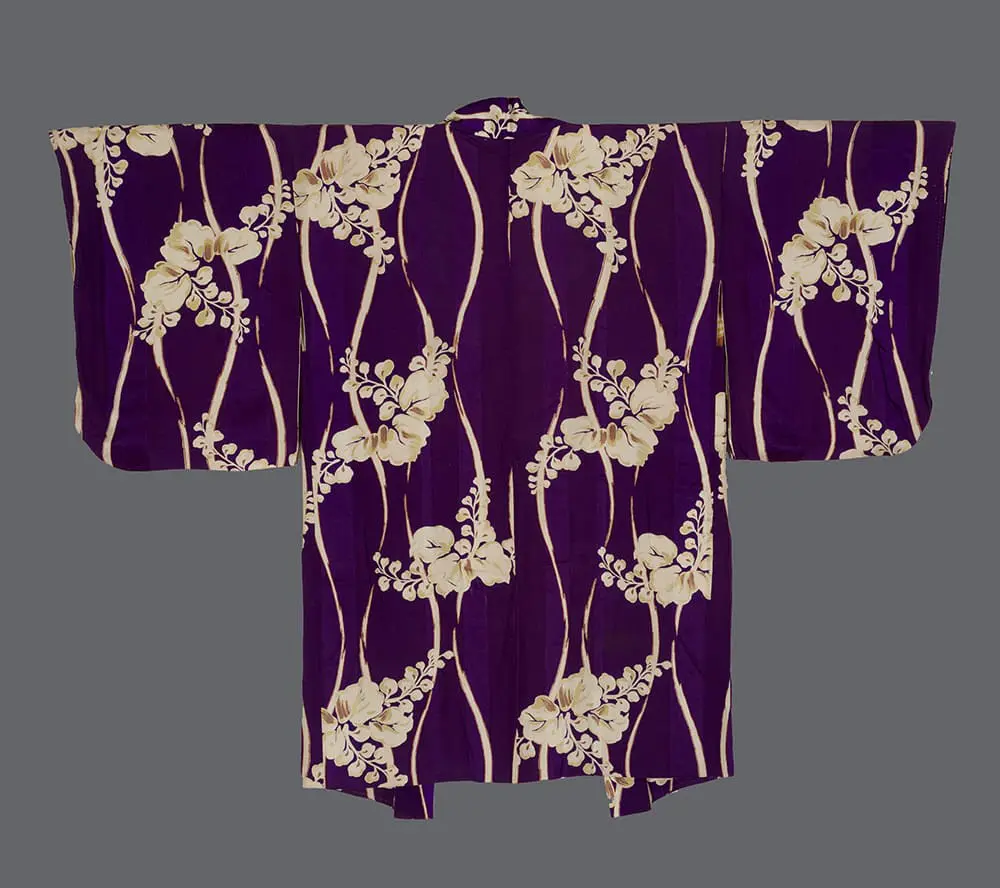


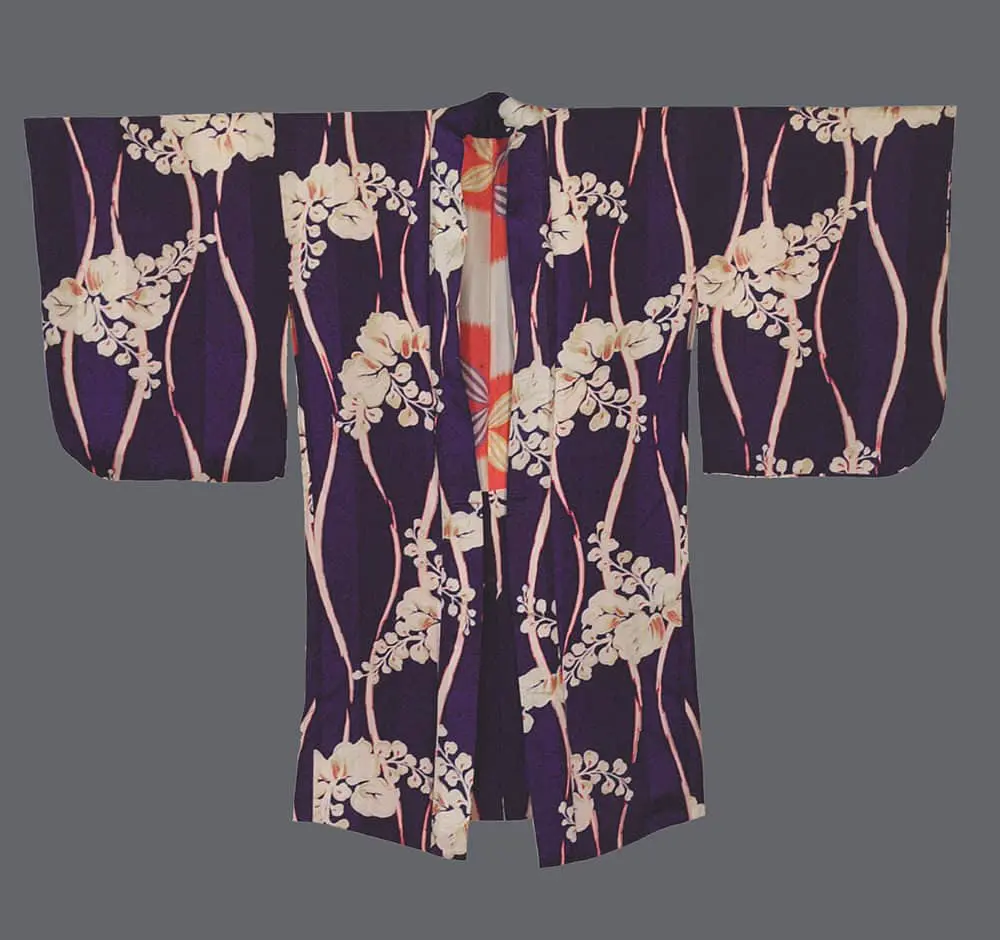
This silk haori is a striking example of early Showa-era textile design, utilizing the era's technical advancements in printing to create a rhythmic and modern botanical statement. The garment is rendered on a deep, saturated purple ground, providing a regal architectural field for its high-contrast surface decoration.
The primary design features a series of stylized, cream-colored floral clusters that appear to climb across the body and sleeves. These blossoms are interconnected by sweeping, vertically-oriented undulating lines that mimic the organic movement of vines or flowing water. The composition is highly structured yet fluid, reflecting the 1930s transition toward bold, graphic layouts that reimagined classical nature motifs through a Deco-influenced lens. The silk fabric catches the light, adding a subtle "shimmer" to the purple field and enhancing the visual depth of the printed cream patterns.
It measures approximately 48 inches (122 cm) from sleeve-end to sleeve-end and stands at 36 inches (91 cm) in height.
Display & Installation Notes


Payment Options: We primarily accept PayPal for all transactions. Credit and debit cards are not accepted. If you prefer to pay by personal check instead of PayPal, please note this preference in the "Additional comments" field when placing your order.Ordering Process
To receive your PayPal invoice, simply fill out the form.
Shipping Details: We ship all orders to the address associated with your PayPal payment. Please ensure your PayPal shipping address is current and accurate.A phone number is required during checkout, as our shipping carrier may need to contact you regarding delivery questions.Shipping RatesUnited States and Canada: $20International destinations (air mail): $40