.avif)

Tobacco Brown Rinzu Silk Haori: Woven Geometric Damask
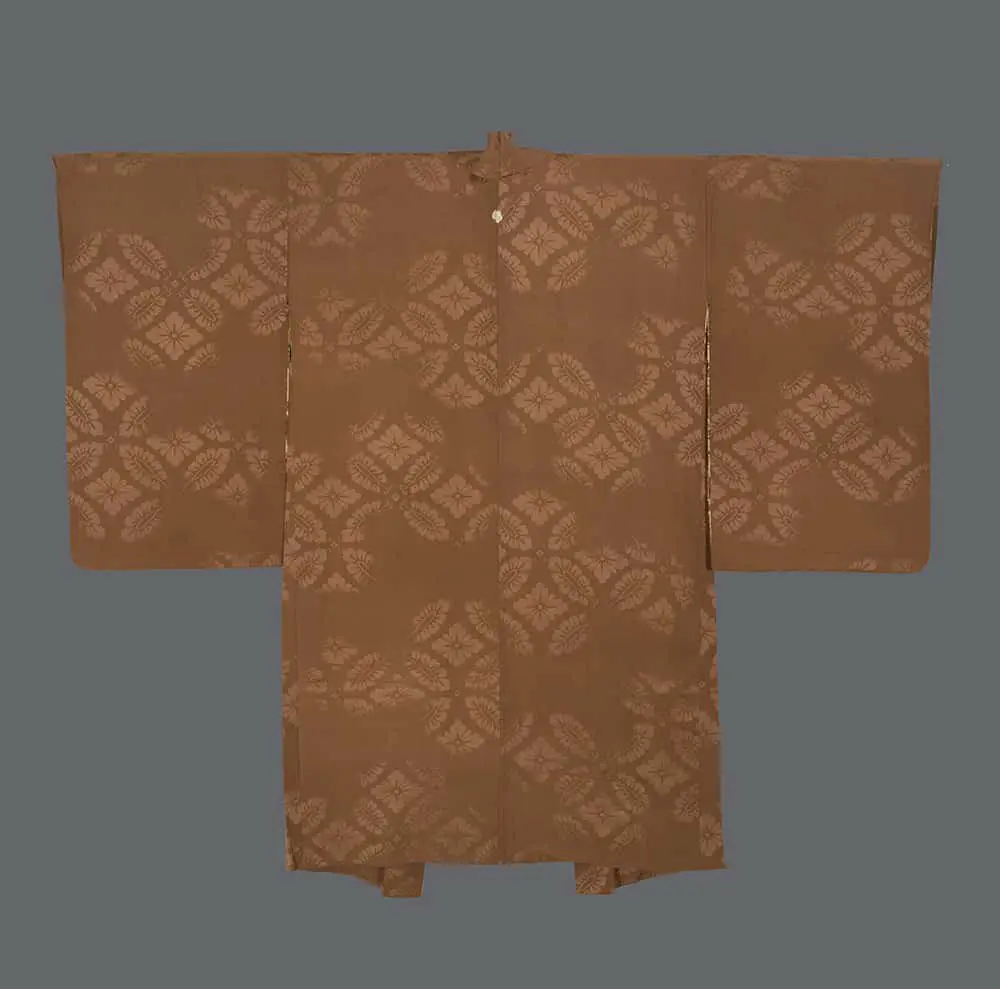


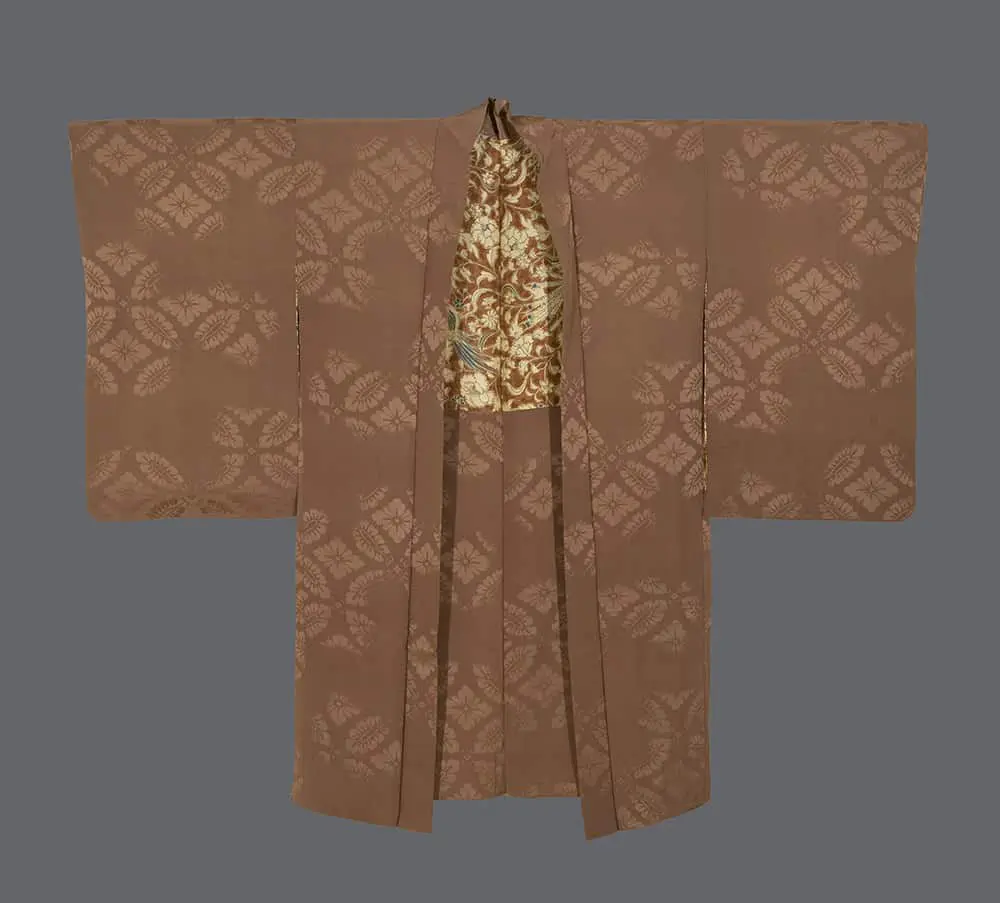
This rinzu (damask) silk haori from the early Showa era (1926–1940) is a sophisticated example of monochromatic textile design. The garment is crafted in a warm, earthy tobacco-brown hue, where the primary decorative impact is achieved through the architectural interplay of light and shadow on the woven surface.
The all-over damask patterns consist of large, repeating geometric medallions, each containing a stylized four-pointed floral or star-like motif at its center. These medallions are surrounded by a rhythmic arrangement of serrated, leaf-like forms that create a secondary lattice-like grid across the entire body and sleeves. Because the design is woven rather than dyed, the motifs appear and disappear depending on the angle of the light, showcasing the high-quality technical precision of the rinzu technique during this period. This piece represents the refined, understated elegance of pre-war Japanese fashion, where complex traditional iconography was presented with a clean, structural modernism.
Its measurements are 49 inches (124 cm) from sleeve-end to sleeve-end, with a height of 40 inches (102 cm).
Display & Installation Notes


Payment Options: We primarily accept PayPal for all transactions. Credit and debit cards are not accepted. If you prefer to pay by personal check instead of PayPal, please note this preference in the "Additional comments" field when placing your order.Ordering Process
To receive your PayPal invoice, simply fill out the form.
Shipping Details: We ship all orders to the address associated with your PayPal payment. Please ensure your PayPal shipping address is current and accurate.A phone number is required during checkout, as our shipping carrier may need to contact you regarding delivery questions.Shipping RatesUnited States and Canada: $20International destinations (air mail): $40