.avif)

Kasuri Kimono with Monochrome Geometric Motifs
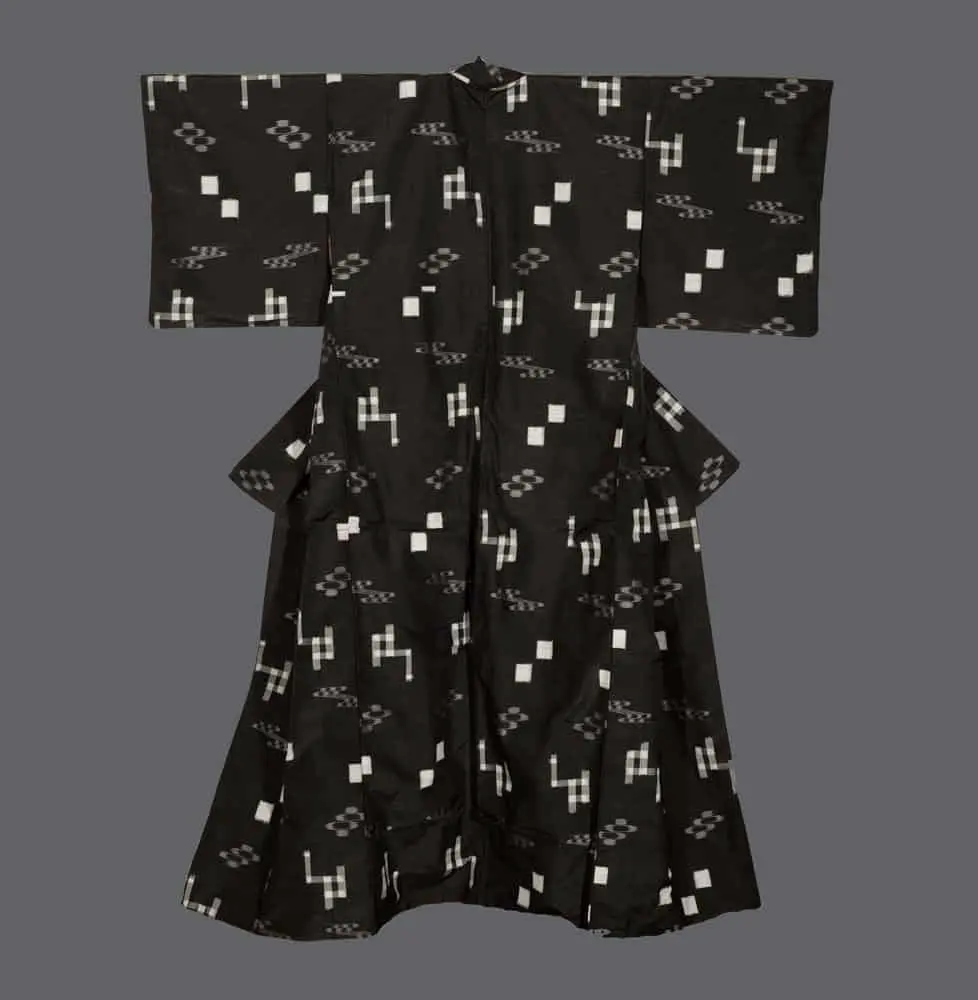


This kimono demonstrates the continued evolution of kasuri weaving techniques adapted to modern synthetic fibers. Kasuri, known in other textile traditions as ikat, involves resist-dyeing threads before weaving, producing patterns with characteristically soft, slightly irregular edges where colors meet. The relatively heavy weight indicates this garment was designed for winter wear, with the synthetic fiber providing warmth, durability, and easy care—practical considerations that became increasingly important in postwar Japan's busy modern lifestyle.
Against the deep black ground, an array of geometric motifs floats in white and gray tones: solid squares, grid-checked rectangles, angular L-shaped forms, and clusters of small circles arranged in flower-like configurations. The scattered, seemingly random placement of these abstract elements creates a dynamic, contemporary aesthetic that departs from traditional kasuri patterns, which often featured more regular repeats or recognizable pictorial imagery. This abstraction reflects the influence of modernist design principles on traditional Japanese textile arts during the latter 20th century.
The monochromatic palette of black, white, and gray speaks to sophisticated urban taste, offering versatility for various occasions while maintaining visual interest through the interplay of geometric forms. Some motifs suggest distant references to traditional patterns—the circular clusters perhaps evoking stylized flowers, the angular shapes recalling architectural elements
It is in very good condition, despite showing patina staining on the inner lining. Its measurements are approximately 49 inches (124 cm) from sleeve-end to sleeve-end and 57 inches (145 cm) in height.
Display & Installation Notes


Payment Options: We primarily accept PayPal for all transactions. Credit and debit cards are not accepted. If you prefer to pay by personal check instead of PayPal, please note this preference in the "Additional comments" field when placing your order.Ordering Process
To receive your PayPal invoice, simply fill out the form.
Shipping Details: We ship all orders to the address associated with your PayPal payment. Please ensure your PayPal shipping address is current and accurate.A phone number is required during checkout, as our shipping carrier may need to contact you regarding delivery questions.Shipping RatesUnited States and Canada: $20International destinations (air mail): $40