.avif)

Peony & Butterfly Dounuki Juban: Silkscreened Silk
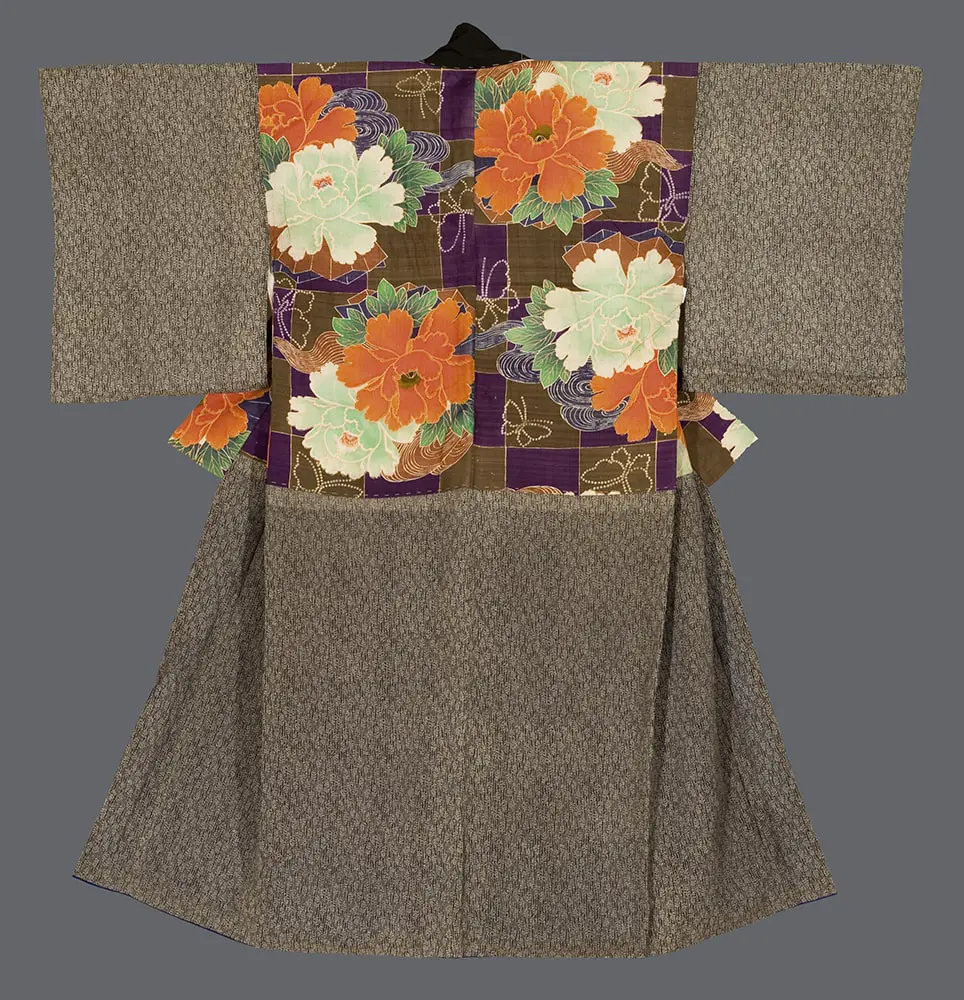


This silk juban (under-kimono) is a striking example of the dounuki construction style, which pieces together contrasting fabrics to create a functional yet artistic garment. The bodice features an exuberant silkscreened composition of large-scale peonies in vibrant orange and mint green. These "kings of flowers" are set against a bold purple and brown checkerboard (ichimatsu) pattern, symbolizing prosperity and familial continuity. The precise silkscreening technique highlights the mid-20th-century shift toward saturated, graphic aesthetics.
In contrast, the side panels, sleeves, and lower hem are crafted from katazome (stencil-dyed) silk. This area displays a dense, repeating pattern of delicate butterflies and floral tendrils on a muted grey-brown ground. Butterflies traditionally represent spiritual transformation, joy, and longevity. The juxtaposition of the massive, painterly peonies with the fine, artisanal stencilwork reflects a dialogue between industrial progress and traditional craftsmanship. Designed as an underlayer, this garment allowed for a hidden expression of luxury and personal style, where bold geometry and auspicious nature motifs coexist in a vibrant, layered harmony.
It measures 48 inches (122 cm) from sleeve-end to sleeve-end and stands 49 inches (124 cm) tall.
Display & Installation Notes


Payment Options: We primarily accept PayPal for all transactions. Credit and debit cards are not accepted. If you prefer to pay by personal check instead of PayPal, please note this preference in the "Additional comments" field when placing your order.Ordering Process
To receive your PayPal invoice, simply fill out the form.
Shipping Details: We ship all orders to the address associated with your PayPal payment. Please ensure your PayPal shipping address is current and accurate.A phone number is required during checkout, as our shipping carrier may need to contact you regarding delivery questions.Shipping RatesUnited States and Canada: $20International destinations (air mail): $40