.avif)

Teal Summer Kimono: Metallic Lacquer Dragonfly Art
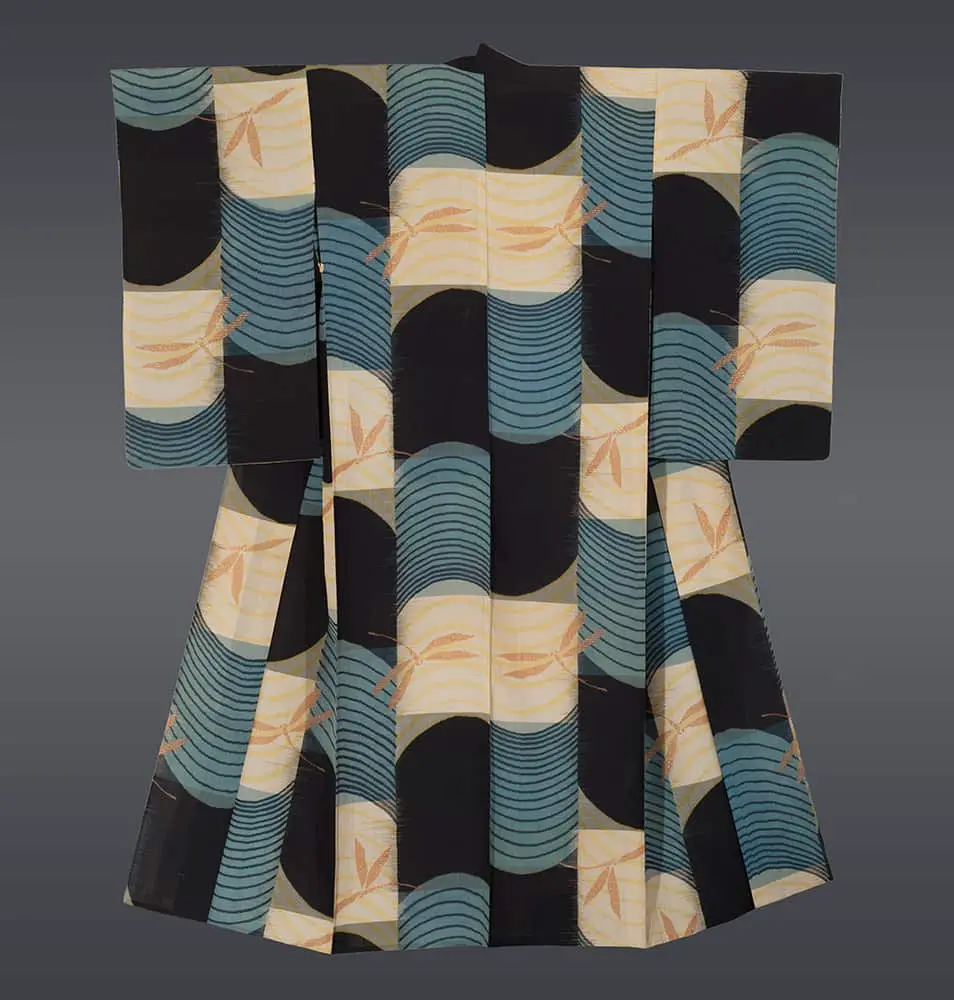


This 1930s unlined summer kimono is a sophisticated example of textile engineering. The intricate design is achieved entirely through complex weaving techniques rather than surface dyeing. The dragonfly motifs are executed using supplementary weft patterning with metallic threads—likely lacquered foil or urushi-ito—which float over the sheer background, catching the light and adding a glimmering texture against the matte fabric. The blurred, softened edges of the teal, black, and cream color blocks suggest the influence of kasuri (ikat) or the hogushigiori (stencil-dyed warp) technique common in Meisen silk, creating a dreamy, soft-focus aesthetic that contrasts beautifully with the crisp, metallic precision of the insects.
Visually, the garment is a testament to the Showa Modern aesthetic, fusing traditional Japanese motifs with the bold geometry of Western Art Deco. The composition is built upon a distorted checkerboard foundation, where the rigid squares have been transformed into undulating, rhythmic waves. This dynamic abstraction of water creates a sense of continuous flow and kinetic energy, mirroring the industrial speed and modernism of the 1930s. The high-contrast palette of deep midnight black, cool aquatic teal, and cream is stark and graphic, rejecting the subtle gradations of earlier eras in favor of a poster-like visual impact that would have appealed to the fashionable, modern woman of the pre-war era.
Symbolically, the dragonfly (tombo) is a powerful and auspicious motif. Historically known as the "victory insect" (kachimushi) because it flies only forward and never retreats, it was once a favorite symbol of the samurai class. In the context of this summer garment, however, the dragonfly serves a seasonal and sensory purpose: it signals the refreshing coolness of early autumn, and its association with water—reinforced by the abstract wave patterns—provides a psychological respite from the summer heat. The combination of the water imagery and the "victory insect" suggests a wearer who is both resilient and effortlessly chic, navigating the changing currents of 20th-century society with grace.
There are several inconspicuous pin-holes along the shoulder line. Measuring approximately 49 inches (124 cm) from sleeve-end to sleeve-end, this kimono stands at about 59 inches (150 cm) in height.
Display & Installation Notes


Payment Options: We primarily accept PayPal for all transactions. Credit and debit cards are not accepted. If you prefer to pay by personal check instead of PayPal, please note this preference in the "Additional comments" field when placing your order.Ordering Process
To receive your PayPal invoice, simply fill out the form.
Shipping Details: We ship all orders to the address associated with your PayPal payment. Please ensure your PayPal shipping address is current and accurate.A phone number is required during checkout, as our shipping carrier may need to contact you regarding delivery questions.Shipping RatesUnited States and Canada: $20International destinations (air mail): $40