.avif)

Taisho Ro Silk Kimono: Teal & Oxblood Basho Banana Leaf Art
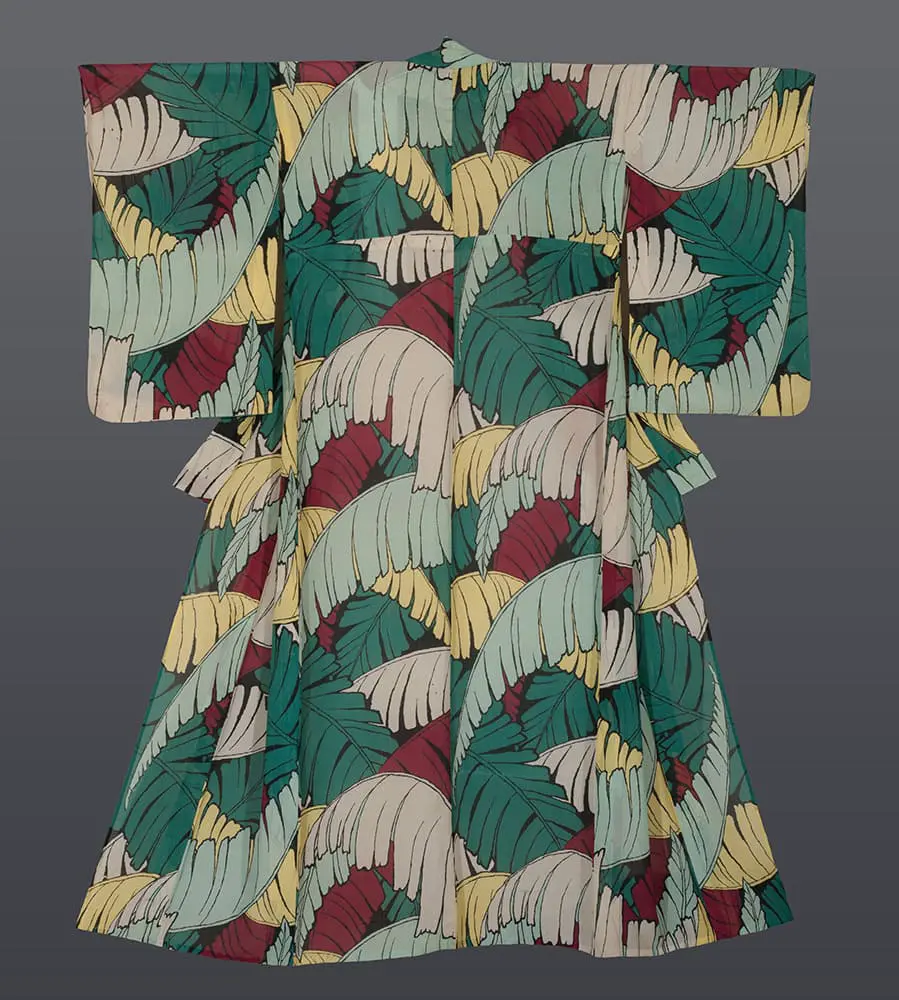


This ro gauze summer kimono features a vibrant and rhythmic design -- the visual dominance of the piece comes from the large, overlapping banana leaves, known as basho in Japanese, which cascade down the garment in a dense, jungle-like arrangement. The color palette is sophisticated yet high-contrast, utilizing shades of teal green, muted mustard yellow, deep oxblood red, and creamy white to define the distinct sections of the foliage. The close-up view reveals the intricate ro weave, a silk leno technique where twisted threads create horizontal lines of transparency. This openwork structure not only serves the functional purpose of ventilation for the wearer during the humid Japanese summer but also adds a textural depth to the print, allowing the design to appear as though it is dappled with light.
The artistic style of this kimono strongly evokes the Taisho Roman aesthetic, a period in early 20th-century Japan that blended traditional sensibilities with Western Art Deco and Art Nouveau influences. The graphic, flattened perspective of the leaves and the bold use of color blocking depart from the more subtle, naturalistic designs of the Edo period, leaning instead toward a modern, geometric abstraction. This graphic boldness suggests the garment dates from the Taisho to early Showa era, a time when kimono fashion embraced dynamic, large-scale patterns that mirrored the changing, modernizing world.
In terms of symbolism, the basho motif is quintessential to summer. Because the banana plant is associated with tropical climates, wearing its image was believed to psychologically induce a sense of coolness for the viewer and the wearer, a practice known as "cooling the eyes." Historically, the banana leaf also carries poetic connotations of impermanence and the fragility of life, as the large leaves are easily torn by the wind—a distinct literary reference often associated with the famous haiku poet Matsuo Basho. However, in this specific textile, the leaves appear lush and unbroken, emphasizing vitality and the exotic allure of the season rather than melancholy.
Its measurements are 48 inches (122 cm) from sleeve-end to sleeve-end and 55 inches (140 cm) in height.
This artwork is featured on page 223 of Art Kimono: Aesthetic Revelations of Japan, 1905-1960. This book, published by Yorke Antique Textiles, can be previewed or purchased on our website here.
Display & Installation Notes


Payment Options: We primarily accept PayPal for all transactions. Credit and debit cards are not accepted. If you prefer to pay by personal check instead of PayPal, please note this preference in the "Additional comments" field when placing your order.Ordering Process
To receive your PayPal invoice, simply fill out the form.
Shipping Details: We ship all orders to the address associated with your PayPal payment. Please ensure your PayPal shipping address is current and accurate.A phone number is required during checkout, as our shipping carrier may need to contact you regarding delivery questions.Shipping RatesUnited States and Canada: $20International destinations (air mail): $40