.avif)

Teal Rinzu Kimono: Art Deco Grid & Yellow Yabane Art
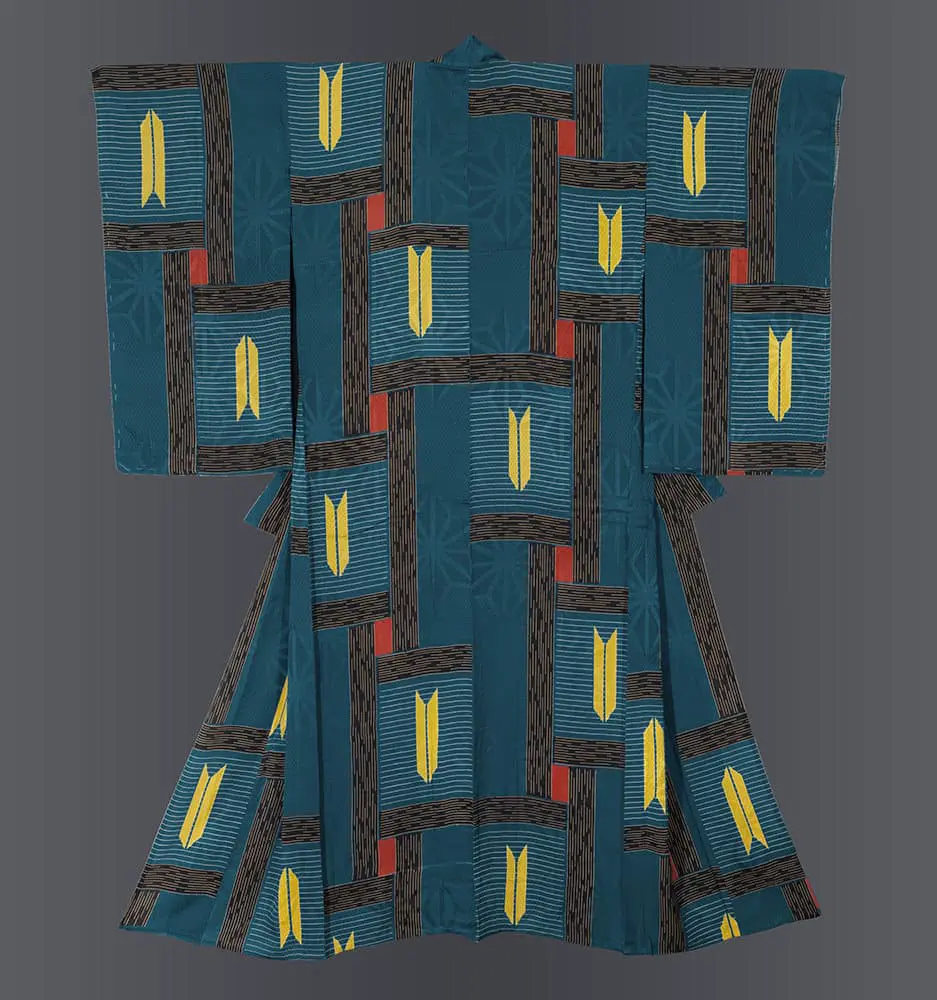


This garment is a vibrant example of the Taisho Roman aesthetic, merging traditional iconography with the bold, geometric experimentation of the 1920s and 1930s. The design is structured around a staggered, masonry-like grid of deep teal and chocolate brown rectangular blocks. Within select panels, bright yellow yabane (arrow fletching) motifs float against a background of thin horizontal stripes, creating a sharp, high-contrast visual rhythm. This structured, almost architectural layout strongly evokes the influence of Art Deco and Constructivism, art movements that prioritized geometric abstraction and were gaining immense popularity in Japan's urban centers during this modan era.
While the surface pattern is daringly modern, the underlying symbolism remains deeply rooted in Japanese tradition. The yabane motif is historically significant for weddings and coming-of-age ceremonies; because an arrow shot from a bow does not return, it symbolizes steadfast determination and the idea that a bride will not need to return to her parents' home. Adding a layer of textural complexity, the rinzu silk damask features a woven-in asanoha (hemp leaf) pattern, visible in the solid teal sections as a subtle play of light and shadow. This hemp leaf motif represents robust growth and good health. The juxtaposition of these auspicious symbols with a graphic, stencil-dyed layout reflects the dynamic lifestyle of the pre-war Japanese woman, who comfortably navigated between traditional customs and a rapidly modernizing world.
Its measurements span 50 inches (127 cm) from sleeve-end to sleeve-end and stand at 60 inches (152 cm) in height.
This artwork is featured on page 267 of Art Kimono: Aesthetic Revelations of Japan, 1905-1960. This book, published by Yorke Antique Textiles, can be previewed or purchased on our website here.
This piece also featured on page 94 of the Spring 2022 edition of Arts of Asia.
Display & Installation Notes


Payment Options: We primarily accept PayPal for all transactions. Credit and debit cards are not accepted. If you prefer to pay by personal check instead of PayPal, please note this preference in the "Additional comments" field when placing your order.Ordering Process
To receive your PayPal invoice, simply fill out the form.
Shipping Details: We ship all orders to the address associated with your PayPal payment. Please ensure your PayPal shipping address is current and accurate.A phone number is required during checkout, as our shipping carrier may need to contact you regarding delivery questions.Shipping RatesUnited States and Canada: $20International destinations (air mail): $40