.avif)

Meiji Silk Kimono: Brown & Terracotta Geometric Plaid
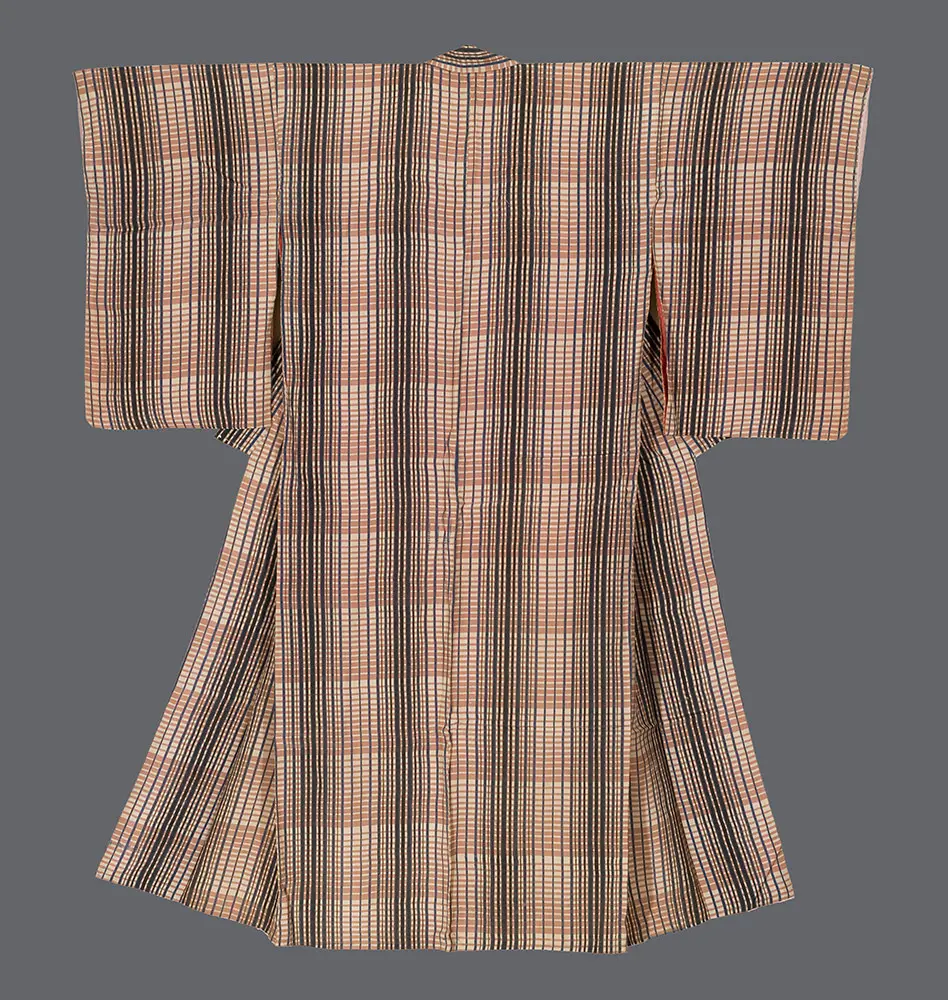


This silk kimono is a rare and evocative example from the late Meiji period, showcasing the transition from traditional Edo-style restraint to the bolder, more eclectic palettes of the early 20th century. The garment is defined by a dense, architectural grid of vertical and horizontal lines, creating a sophisticated plaid or checked pattern across the entire surface. The primary palette consists of deep chocolate-brown, warm tan, and soft terracotta, reflecting the earthy yet refined color sensibilities favored during the late Meiji era.
The composition is characterized by its rhythmic repetition, where thick vertical bands of dark brown are intersected by fine, hair-line horizontal stripes. This creates a sense of structural depth and visual texture, a hallmark of the high-quality silk weaving of the period. The precision of the grid reflects the period's growing interest in geometric order and industrial-influenced design, even as it maintains the handmade integrity of traditional Japanese silk. This piece stands as a bridge between the classical woven traditions and the emerging modernism that would fully bloom in the subsequent Taisho and Showa eras.
It measures 50 inches (127 cm) from sleeve-end to sleeve-end and stands at 57 inches (145 cm) in height.
Display & Installation Notes


Payment Options: We primarily accept PayPal for all transactions. Credit and debit cards are not accepted. If you prefer to pay by personal check instead of PayPal, please note this preference in the "Additional comments" field when placing your order.Ordering Process
To receive your PayPal invoice, simply fill out the form.
Shipping Details: We ship all orders to the address associated with your PayPal payment. Please ensure your PayPal shipping address is current and accurate.A phone number is required during checkout, as our shipping carrier may need to contact you regarding delivery questions.Shipping RatesUnited States and Canada: $20International destinations (air mail): $40