.avif)

Silk Sō‑Kanoko Shibori Kimono with Allover Dots
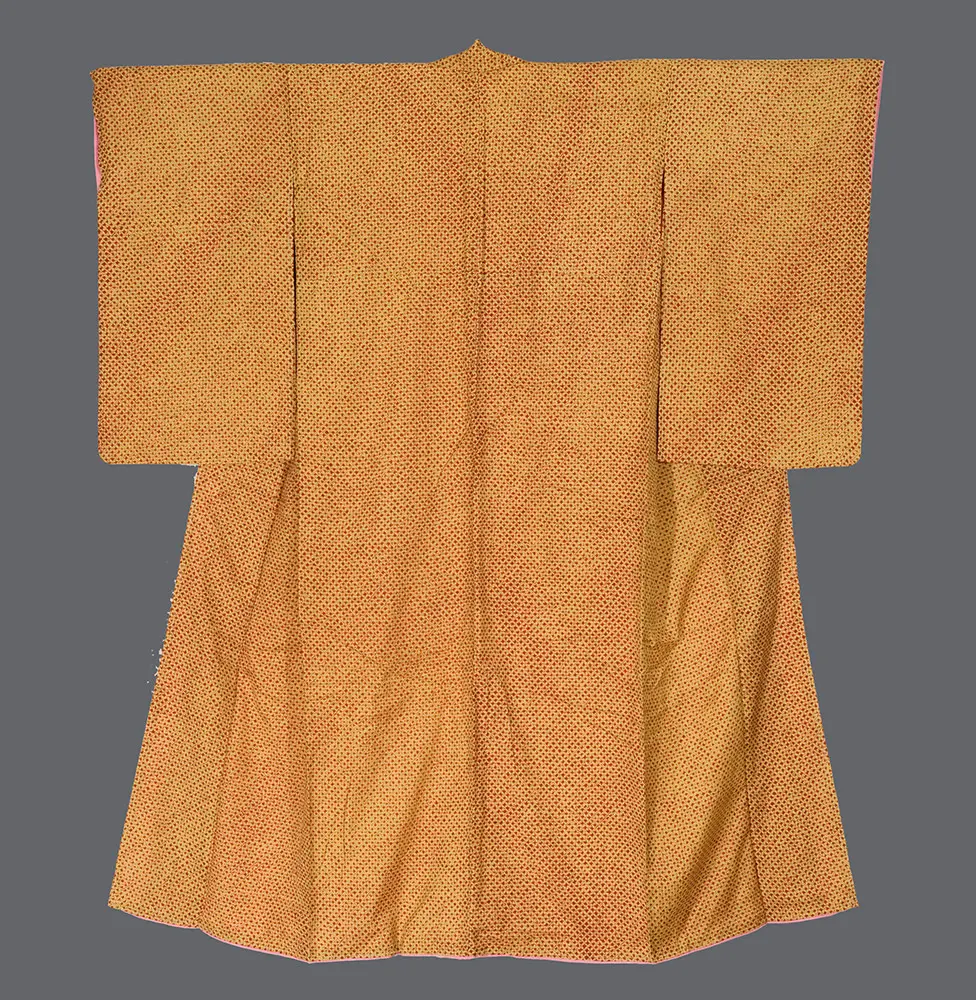



This silk kimono demonstrates one of the most labor-intensive textile techniques in Japanese tradition: sō-kanoko shibori, where the entire surface is covered with minute hand-tied dots. Each tiny spot represents an individual pinch of fabric, tightly bound with thread before dyeing to resist the dye bath—a process requiring extraordinary patience and skill when executed across an entire garment.
The cumulative effect creates a warm golden-orange field with remarkable textural richness. From a distance, the garment reads as a unified warm tone, but closer inspection reveals countless individual dots with their characteristic slight irregularities—evidence of handcraft that distinguishes this technique from any mechanical reproduction. The overall pattern, resembling a fawn's spotted coat, gives kanoko ("fawn spot") shibori its name.
During the Edo period, such comprehensive kanoko-covered garments were considered so luxurious that sumptuary laws restricted their wear, as the enormous labor required to bind thousands of individual dots made them symbols of excessive wealth. A single garment might require months of painstaking work by skilled artisans.
The pink lining visible at the edges provides soft contrast to the warm golden surface. This kimono represents textile as labor of devotion—transforming raw silk through countless repetitive acts into something that transcends mere fabric to become testament to human patience and the Japanese reverence for process as much as product.
In excellent condition, it measures 48 inches from sleeve-end to sleeve-end and stands 58 inches tall (122 cm x 147 cm).
Display & Installation Notes


Payment Options: We primarily accept PayPal for all transactions. Credit and debit cards are not accepted. If you prefer to pay by personal check instead of PayPal, please note this preference in the "Additional comments" field when placing your order.Ordering Process
To receive your PayPal invoice, simply fill out the form.
Shipping Details: We ship all orders to the address associated with your PayPal payment. Please ensure your PayPal shipping address is current and accurate.A phone number is required during checkout, as our shipping carrier may need to contact you regarding delivery questions.Shipping RatesUnited States and Canada: $20International destinations (air mail): $40