.avif)

Abstract Chirimen Silk Haori Jacket
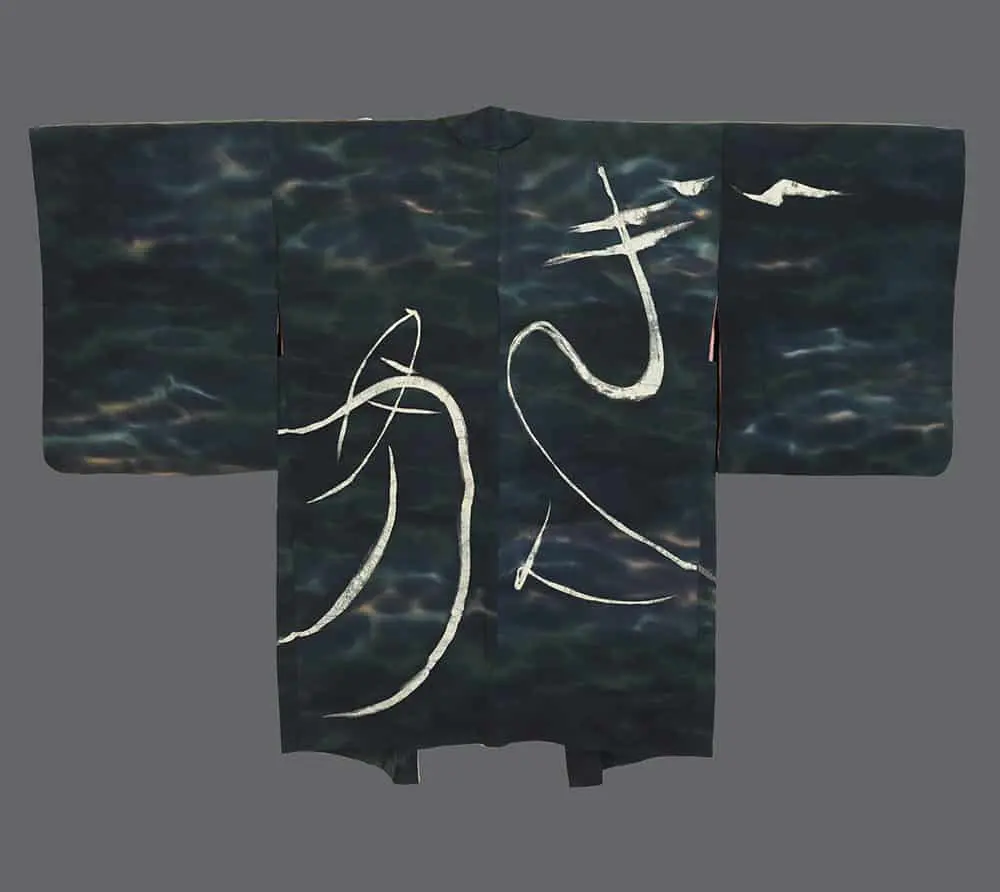


A chirimen silk haori. Painted across a deep, subtly mottled ground, the surface is animated by sweeping, calligraphic white lines that traverse the textile with deliberate asymmetry and controlled spontaneity. These gestural marks recall the physical immediacy of brushwork, their tapering ends and granular edges revealing the absorbent qualities of chirimen silk and the artist’s sensitivity to material response. The background’s softly undulating tones—suggestive of moving water, night sky, or atmospheric depth—create a quiet but resonant field against which the linear forms assert themselves with clarity and restraint.
The visual language strongly evokes postwar abstraction in Japan, particularly the influence of shodō reinterpreted through modernist sensibilities, aligning the work with currents of Abstract Expressionism and Japanese avant-garde calligraphy that gained prominence from the 1950s onward. Rather than conveying literal imagery, the lines function as carriers of rhythm and energy, embodying concepts of movement, breath, and temporal flow. Symbolically, such abstract linear motifs can be read as expressions of ma, the dynamic interval between forms, where meaning arises not only from the painted gesture but also from the surrounding space. The result is a textile that operates as a meditative field of action, merging traditional Japanese brush aesthetics with the global language of modern abstraction.
Display & Installation Notes


Payment Options: We primarily accept PayPal for all transactions. Credit and debit cards are not accepted. If you prefer to pay by personal check instead of PayPal, please note this preference in the "Additional comments" field when placing your order.Ordering Process
To receive your PayPal invoice, simply fill out the form.
Shipping Details: We ship all orders to the address associated with your PayPal payment. Please ensure your PayPal shipping address is current and accurate.A phone number is required during checkout, as our shipping carrier may need to contact you regarding delivery questions.Shipping RatesUnited States and Canada: $20International destinations (air mail): $40