.avif)

Meisen Hitoe Kimono with Ōgi Fans and Hagi Motifs
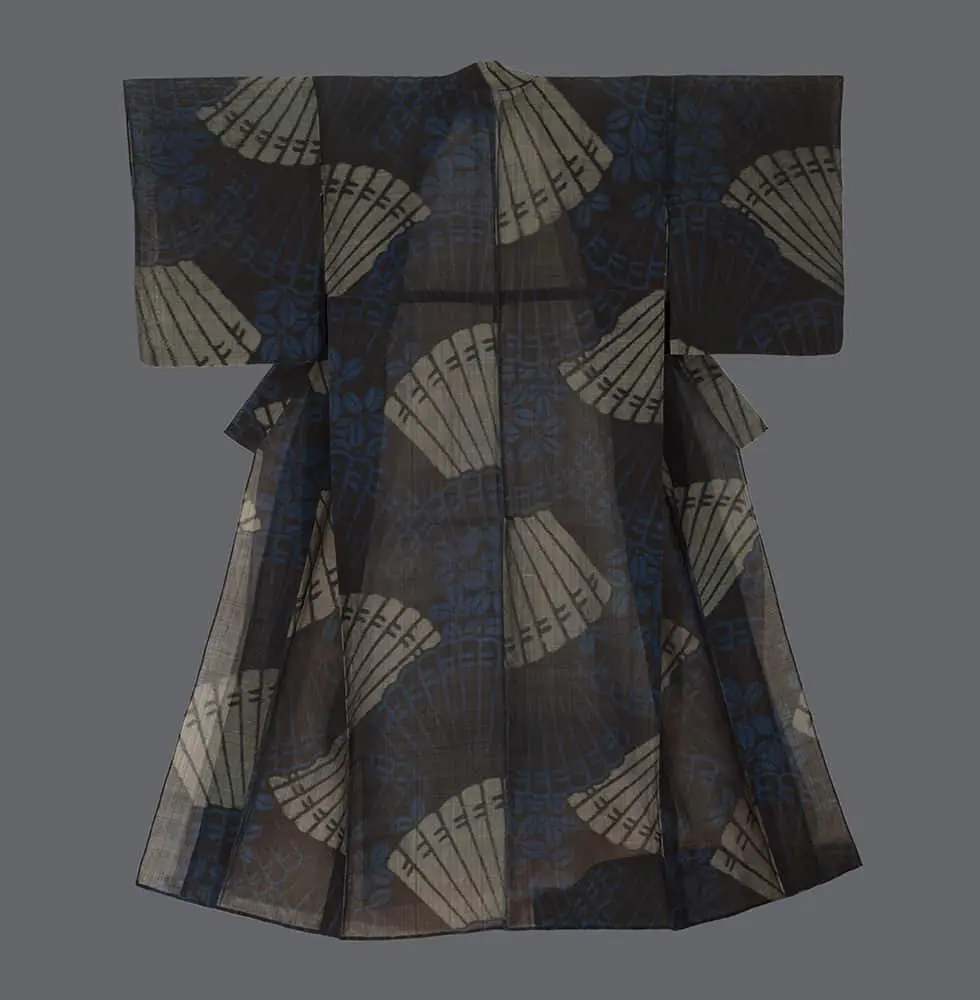


This unlined summer kimono (hitoe) is crafted from sheer meisen silk, a technique developed in the late 19th and early 20th centuries that revolutionized Japanese textile production. Meisen involves pre-dyeing warp and weft threads using stencils before weaving, creating designs with a characteristic soft, slightly blurred edge. The fabric's distinctive raspy, thick texture—despite its sheerness—is a hallmark of quality meisen weaving, providing both visual interest and a satisfying tactile quality.
The design features two quintessentially Japanese motifs: folding fans (ōgi) rendered in pale cream against the dark, semi-transparent ground, and hagi (Japanese bush clover) depicted in deep blue tones. The folding fan carries rich symbolic associations—representing expanding fortune, the unfolding of life's possibilities, and elegance associated with court culture. Fans also evoke coolness and summer breezes, making them particularly appropriate for warm-weather garments. Hagi, one of the seven grasses of autumn in Japanese poetry, blooms in late summer and symbolizes the bittersweet transition between seasons. Its inclusion here suggests the kimono was intended for late summer wear, when thoughts turn toward autumn's approach.
The dark, moody palette and transparent weave would have provided both visual sophistication and practical relief from summer heat. When worn, the sheerness would allow glimpses of the undergarments beneath, creating layered visual depth characteristic of refined Japanese dress.
Its measurements are 48 inches (122 cm) from sleeve-end to sleeve-end and 58 inches (147 cm) in height.
Display & Installation Notes


Payment Options: We primarily accept PayPal for all transactions. Credit and debit cards are not accepted. If you prefer to pay by personal check instead of PayPal, please note this preference in the "Additional comments" field when placing your order.Ordering Process
To receive your PayPal invoice, simply fill out the form.
Shipping Details: We ship all orders to the address associated with your PayPal payment. Please ensure your PayPal shipping address is current and accurate.A phone number is required during checkout, as our shipping carrier may need to contact you regarding delivery questions.Shipping RatesUnited States and Canada: $20International destinations (air mail): $40