.avif)

Meisen Kimono with Shikishi and Chrysanthemum Motifs
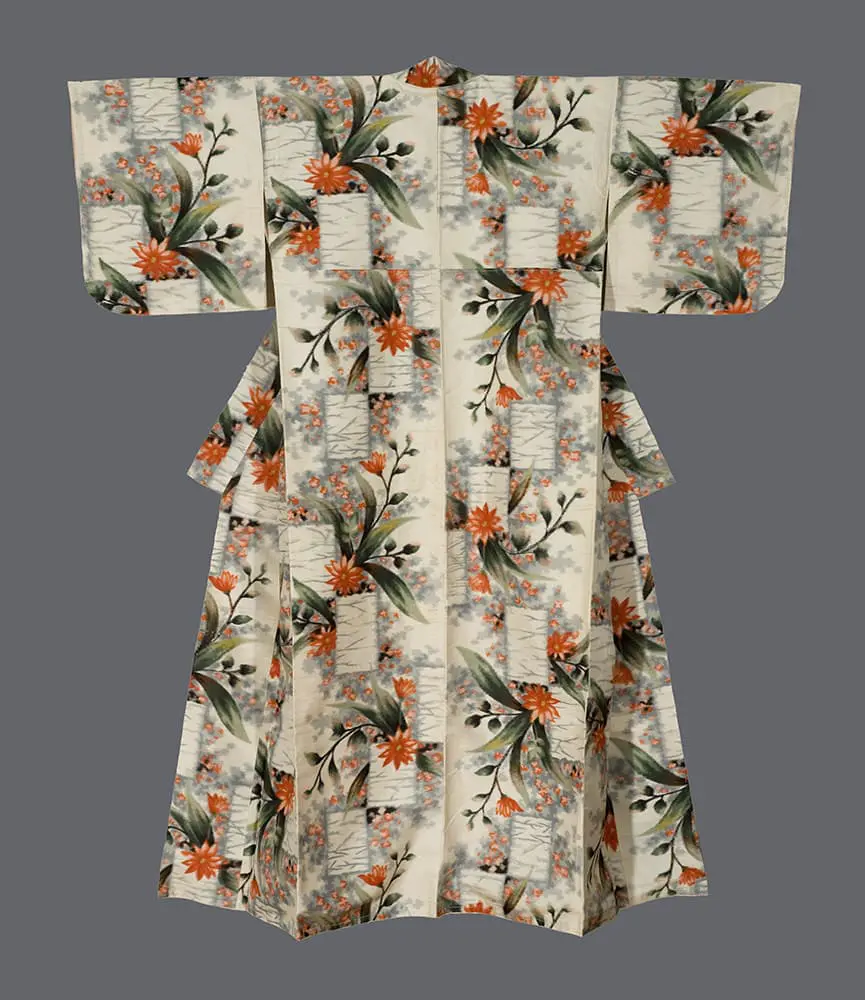


This mid-Showa period kimono (1940-1960) exemplifies meisen silk's capacity for painterly, almost impressionistic designs through the weft ikat (yokogasuri) technique. In this method, the horizontal weft threads are resist-dyed with patterns before weaving, creating imagery with the characteristically soft, slightly feathered edges that distinguish ikat textiles worldwide.
Against a pale cream ground, the design interweaves two distinct elements: naturalistic floral sprays and shikishi, the traditional square paper formats used in Japanese calligraphy and painting. The shikishi appear as subtle gray-toned rectangles floating throughout the composition, some bearing delicate branch motifs that suggest ink paintings or poetry cards. This "paper within textile" conceit was a beloved device in Japanese design, evoking literary culture, artistic refinement, and the layered aesthetic of displaying artwork.
The botanical imagery features vibrant orange-coral chrysanthemums with spiky, radiating petals, accompanied by sweeping dark green leaves and sprays of smaller pink blossoms—possibly ume (plum) or small cherry flowers. Chrysanthemums symbolize longevity, nobility, and autumn, while plum blossoms represent perseverance and the promise of spring. Misty gray washes behind the shikishi suggest atmospheric depth, as if viewing a garden through morning haze.
The overall effect recalls the yamato-e painting tradition, where natural beauty and poetic sentiment merge.
Although in very good condition, it does have numerous light yellow patina spots, making it unsuitable for wear but suitable for display as art. Its measurements are approximately 50 inches (127 cm) from sleeve-end to sleeve-end and 50 inches (127 cm) in height.
Display & Installation Notes


Payment Options: We primarily accept PayPal for all transactions. Credit and debit cards are not accepted. If you prefer to pay by personal check instead of PayPal, please note this preference in the "Additional comments" field when placing your order.Ordering Process
To receive your PayPal invoice, simply fill out the form.
Shipping Details: We ship all orders to the address associated with your PayPal payment. Please ensure your PayPal shipping address is current and accurate.A phone number is required during checkout, as our shipping carrier may need to contact you regarding delivery questions.Shipping RatesUnited States and Canada: $20International destinations (air mail): $40