.avif)

Silk Kimono with Sumi‑e Greys and Abstract Shibori Panels
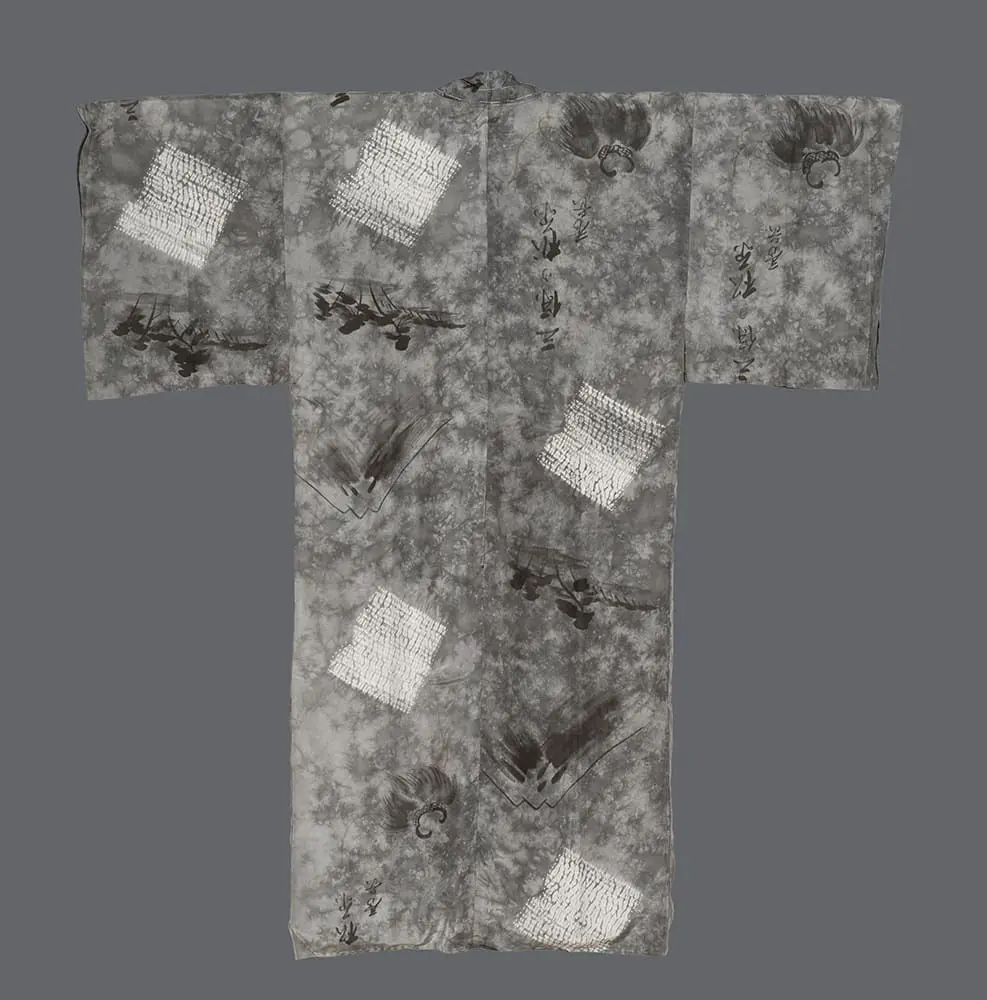

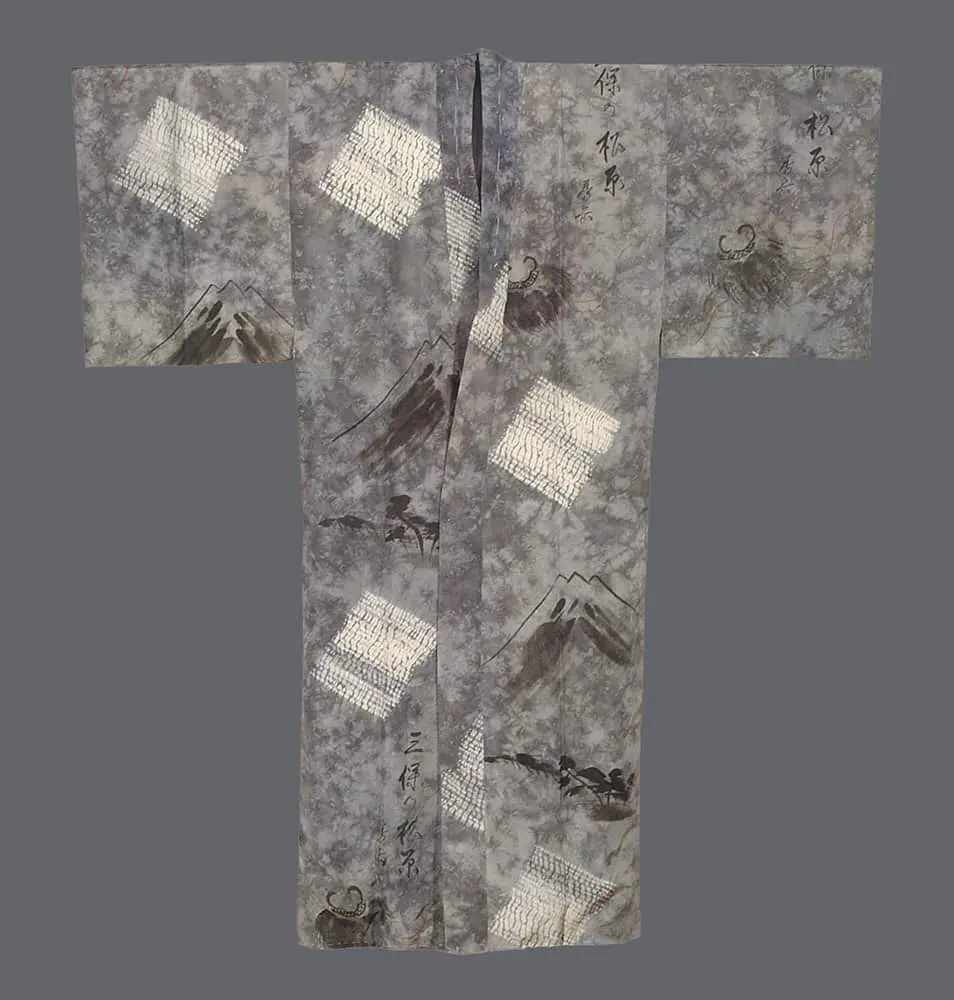
This man’s silk kimono is composed as a subdued, ink-like field in layered greys, evoking the atmosphere of brushed sumi-e painting rather than conventional textile patterning. The ground appears mottled and clouded, suggesting a resist-dyed process such as shibori used not for decorative repetition but to create tonal depth and an almost mineral texture. Against this softly variegated surface, crisp white rectangular forms—likely reserved or tightly bound shibori panels—punctuate the composition, functioning as abstract planes that contrast sharply with the surrounding greys.
Scattered across the garment are freely rendered motifs executed in a painterly hand. These include dark, gestural forms that resemble grasses bending in wind or birds in low flight, as well as crested elements suggestive of traditional heraldic imagery. Calligraphic inscriptions appear intermittently, reinforcing the association with ink painting and literati culture. Rather than following a rigid repeat, these elements are asymmetrically placed, encouraging the eye to move across the surface much as it would when reading a hanging scroll.
The aesthetic strongly recalls the influence of Nanga (Southern School) painting and modernist abstraction as filtered through early twentieth-century Japanese design sensibilities. Emphasis is placed on negative space, brush energy, and tonal restraint rather than overt ornament. Symbolically, the sparse imagery and subdued palette align with ideals of refinement, introspection, and masculine restraint traditionally associated with men’s kimono. Overall, the garment reads as a sophisticated fusion of textile technique and painterly expression, transforming the kimono into a contemplative surface that balances tradition with modern artistic experimentation.
There's some staining on the inner cotton lining. It measures 50 inches from sleeve-end to sleeve-end and stands at 52 inches in height (127 cm x 132 cm).
Display & Installation Notes


Payment Options: We primarily accept PayPal for all transactions. Credit and debit cards are not accepted. If you prefer to pay by personal check instead of PayPal, please note this preference in the "Additional comments" field when placing your order.Ordering Process
To receive your PayPal invoice, simply fill out the form.
Shipping Details: We ship all orders to the address associated with your PayPal payment. Please ensure your PayPal shipping address is current and accurate.A phone number is required during checkout, as our shipping carrier may need to contact you regarding delivery questions.Shipping RatesUnited States and Canada: $20International destinations (air mail): $40