.avif)

Cotton Juban with Katazome Zeni and Coin‑String Motifs
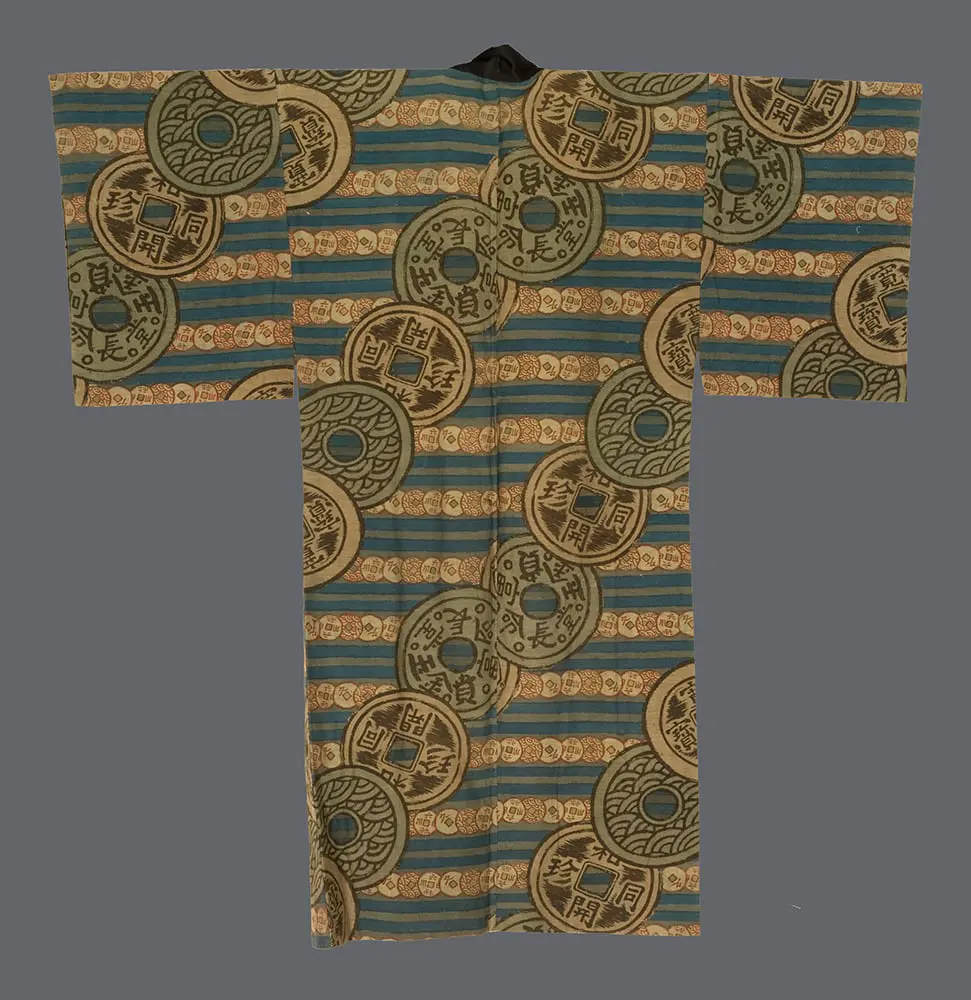


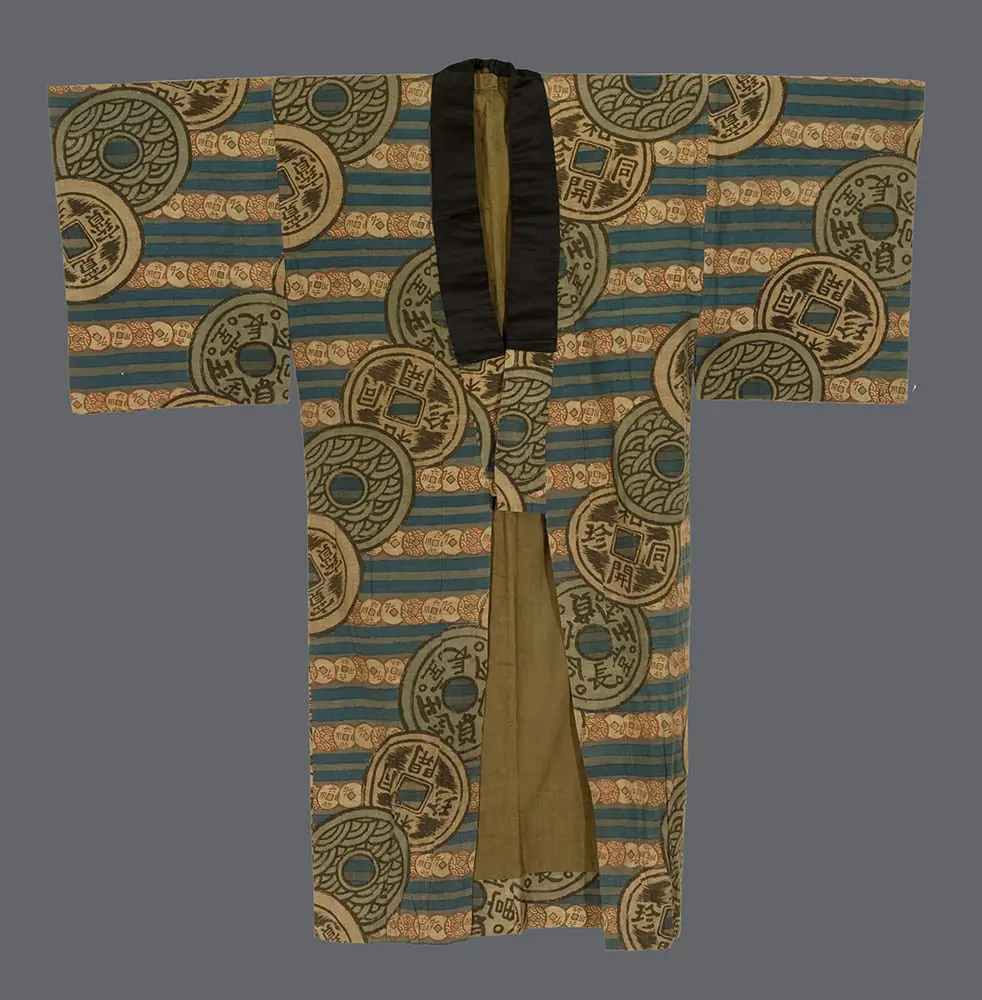
This robust cotton man's juban (undergarment) presents a bold composition of Edo-period coin motifs executed through katazome stencil-dyeing technique. The rice-paste resist method creates crisp, precisely repeated imagery with the characteristic clarity that distinguishes this traditional approach.
Against a ground of horizontal stripes in teal-blue and muted green-gray, large zeni (cash coins) scatter across the surface in olive-gold and brown tones. These distinctive coins feature the characteristic square center hole and bear kanji inscriptions around their circumference—faithful representations of the currency that circulated during the Edo period. Diagonal strings of smaller stacked coins weave between the larger specimens, suggesting the traditional method of stringing cash through their center holes for counting and transport.
Coin imagery ranks among the most directly auspicious motifs in Japanese decorative arts, unambiguously symbolizing wealth, prosperity, and financial good fortune. Coins appear among the takara-mono (precious treasures) associated with the Seven Lucky Gods and feature prominently in celebratory imagery.
As an undergarment, the juban allowed men considerably more freedom in design boldness than outer garments, since only glimpses would appear at collar and sleeve openings. This permitted playful or assertive imagery that might be considered inappropriate for public display. The substantial cotton construction indicates practical everyday use, while the confident, almost humorous abundance of money imagery suggests a wearer with merchant sensibilities or simply an appreciation for good-fortune symbolism worn close to the body.
It measures 49 inches by 49 inches (124.5 cm x 124.5 cm).
Display & Installation Notes


Payment Options: We primarily accept PayPal for all transactions. Credit and debit cards are not accepted. If you prefer to pay by personal check instead of PayPal, please note this preference in the "Additional comments" field when placing your order.Ordering Process
To receive your PayPal invoice, simply fill out the form.
Shipping Details: We ship all orders to the address associated with your PayPal payment. Please ensure your PayPal shipping address is current and accurate.A phone number is required during checkout, as our shipping carrier may need to contact you regarding delivery questions.Shipping RatesUnited States and Canada: $20International destinations (air mail): $40