.avif)

Colorful Rinzu Silk Haori: Large Butterfly & Cloud Motifs
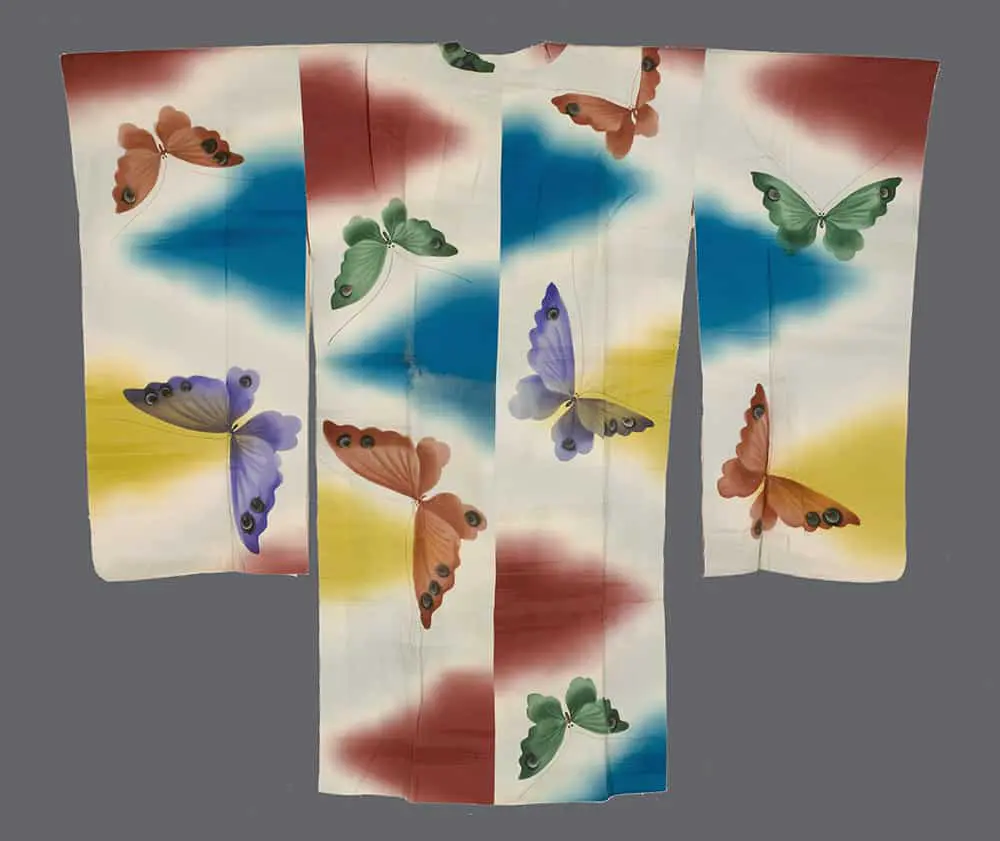

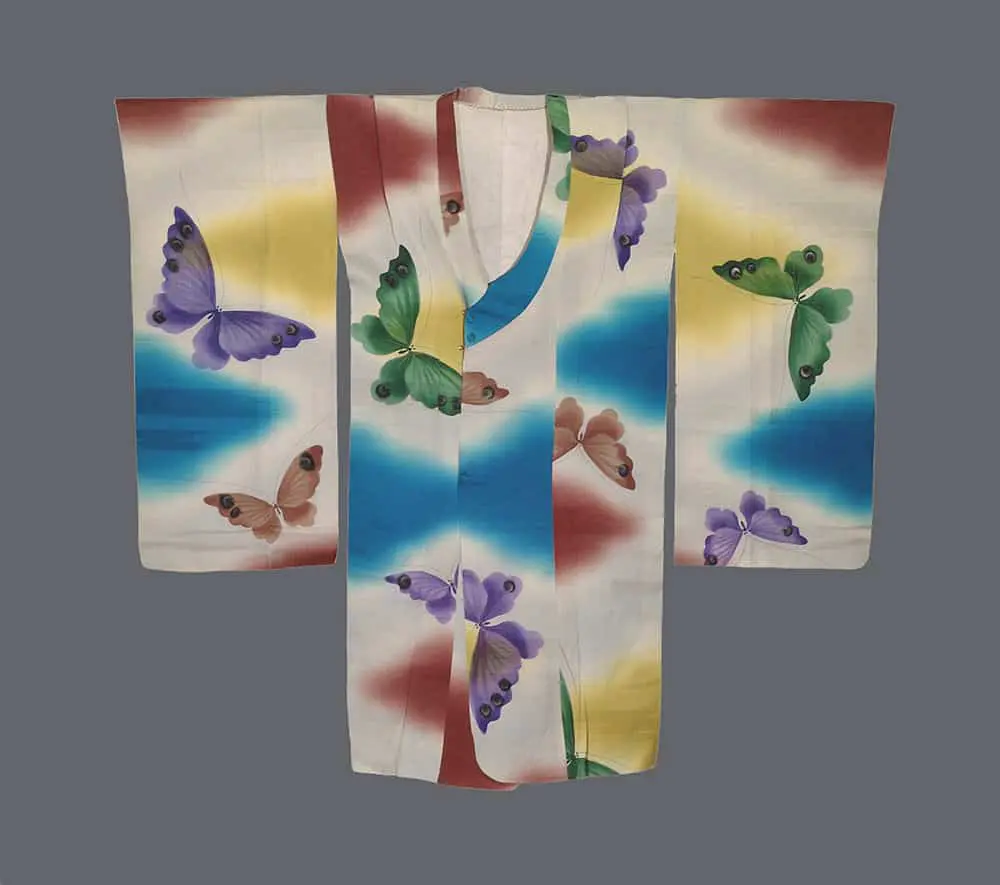
This vibrant haori is a compelling example of Showa period textile design, bridging the gap between traditional outerwear and the more tailored michiyuki style. While it shares technical features with the michiyuki—specifically the use of metal clip inside fasteners—it retains the classic flowing lapels of a haori rather than the characteristic squared collar. The garment is crafted from a high-luster rinzu (damask) silk, which provides a shimmering, architectural field for its bold surface decoration.
The primary composition features a series of large-scale butterfly motifs that appear to flutter across the body and sleeves. These butterflies are rendered through a combination of bold silkscreening and hand-painting, utilizing a saturated palette of violet, emerald green, and russet brown. The background is equally energetic, featuring abstract, airbrushed clouds of cerulean blue, golden yellow, and deep crimson that create a sense of atmospheric depth. This piece reflects the era's talent for blending nostalgic auspicious symbols with a daring, modern sense of scale and color.
In very good condition, though there's a bit of tearing around one or two of the metal clips. It measures 48 inches (122 cm) from sleeve-end to sleeve-end and stands at a height of 43 inches (109 cm).
Display & Installation Notes


Payment Options: We primarily accept PayPal for all transactions. Credit and debit cards are not accepted. If you prefer to pay by personal check instead of PayPal, please note this preference in the "Additional comments" field when placing your order.Ordering Process
To receive your PayPal invoice, simply fill out the form.
Shipping Details: We ship all orders to the address associated with your PayPal payment. Please ensure your PayPal shipping address is current and accurate.A phone number is required during checkout, as our shipping carrier may need to contact you regarding delivery questions.Shipping RatesUnited States and Canada: $20International destinations (air mail): $40