.avif)

Purple Furisode: Yuzen Peonies & Wisteria Silk Art
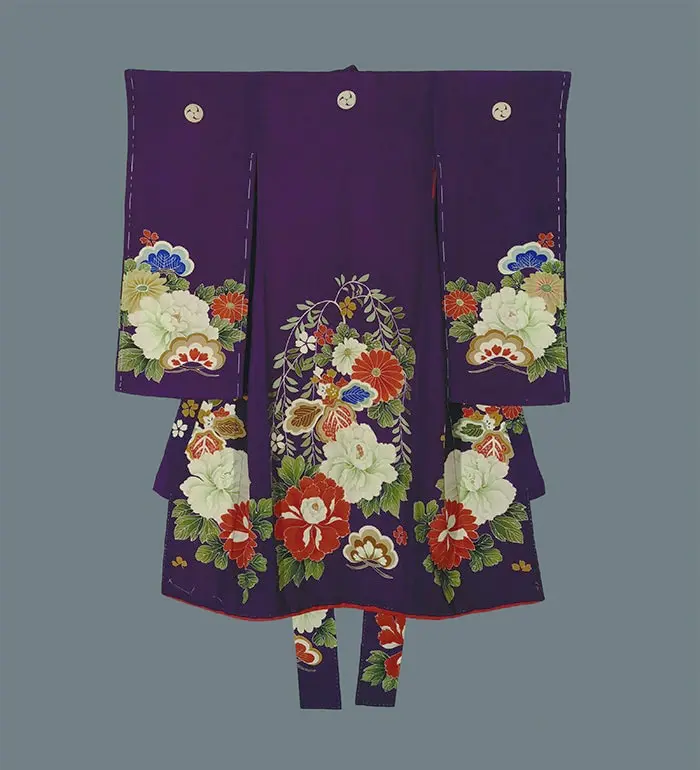
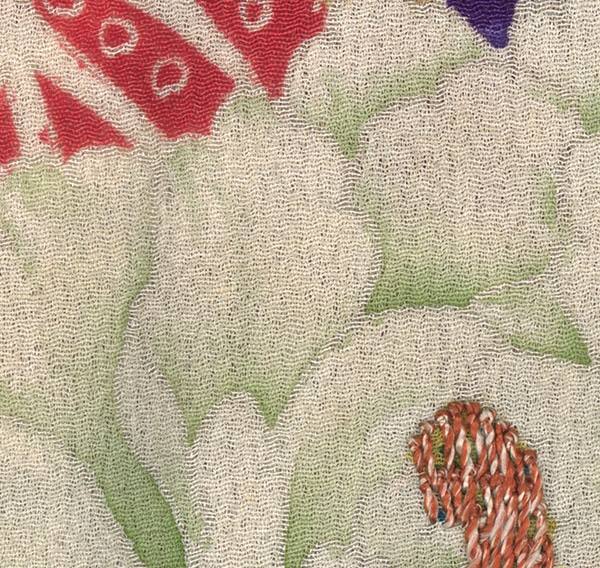
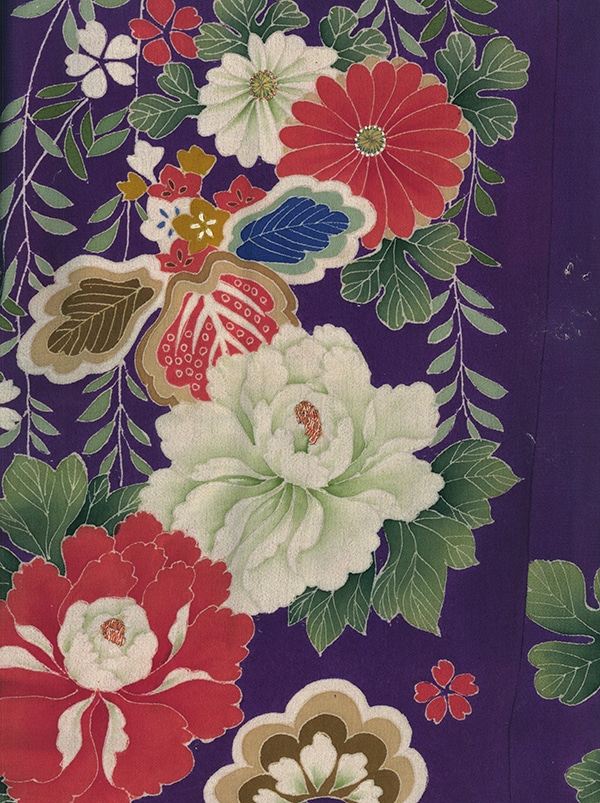
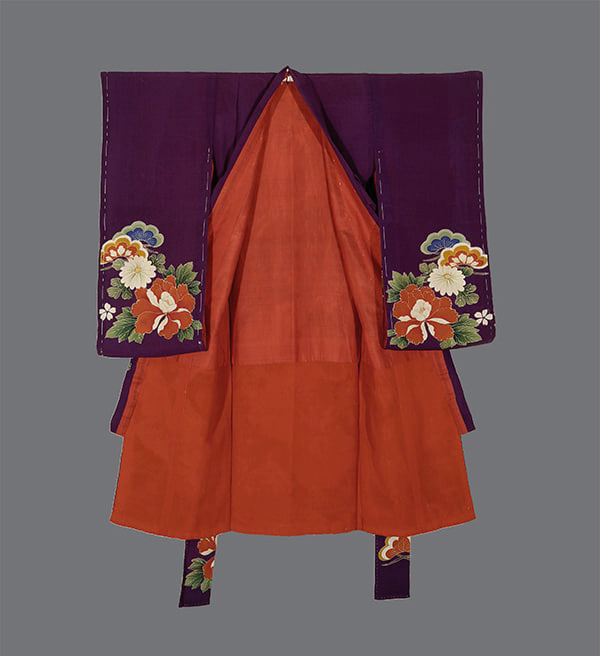
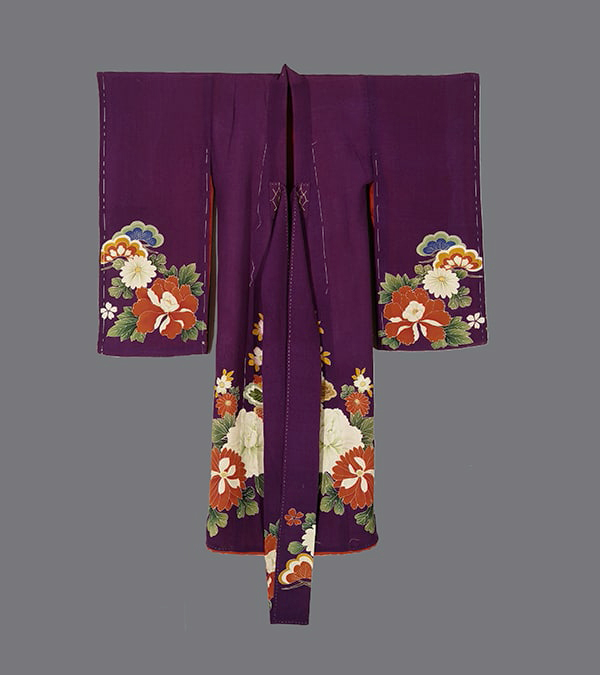
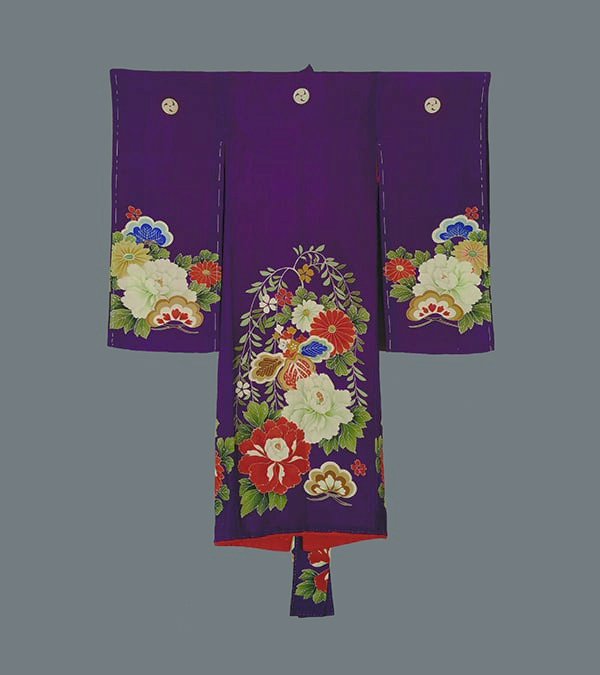
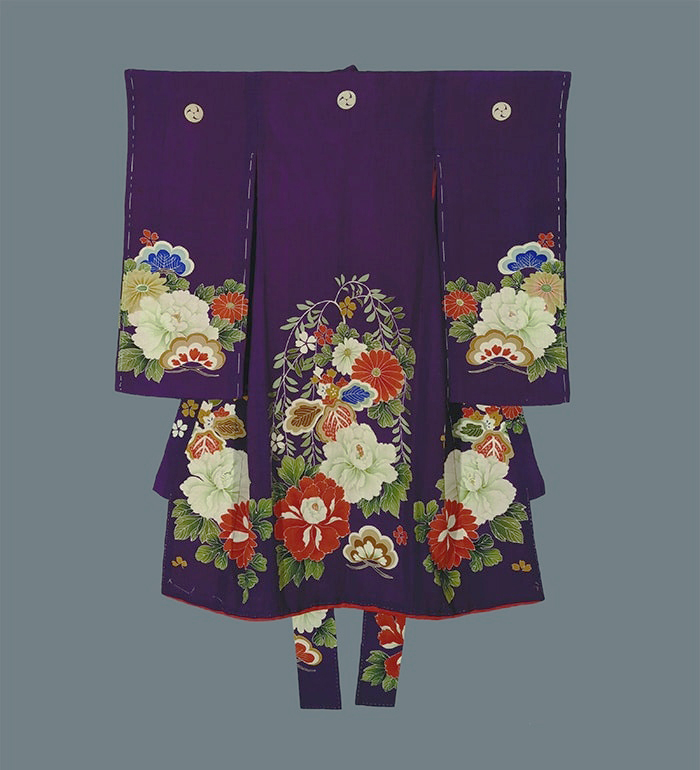
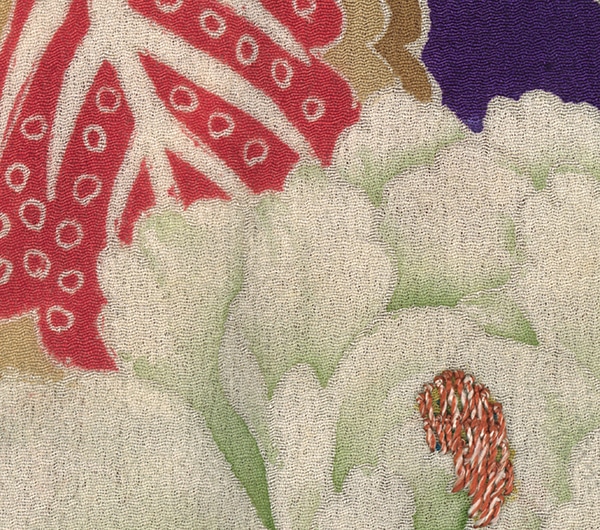
This formal girl’s furisode features a rich, regal purple ground, a color historically associated with the aristocracy, which serves as a striking canvas for a cascading botanical arrangement. The artistry showcases the yuzen resist-dyeing technique at its finest, evident in the crisp white outlines and the subtle, painterly gradations of color within the flower petals—fading from deep coral to soft pink, and lush green to pale chartreuse. The design is further elevated by the addition of embroidery highlights to add texture, sheen, and a three-dimensional quality to the floral centers and outlines. The visible white stitching lines (tucks at the shoulders and waist) indicate that this garment was tailored for a growing child, likely for a celebration such as Shichi-Go-San (a festival for children aged 3, 5, and 7).
The decorative scheme is a classical "Hundred Flowers" style arrangement, centered on three auspicious flora. The dominant motif is the peony (botan), depicted here as large, fluffy white and red blossoms. Known as the "King of Flowers," the peony symbolizes wealth, nobility, and feminine beauty. Interspersed with the peonies are chrysanthemums (kiku), representing longevity and rejuvenation, and wisteria (fuji), seen in the delicate hanging vines that drape over the central bouquet. Wisteria symbolizes grace, humility, and because of its long vines, the continuity of family lineage. The combination of these flowers suggests a wish for the young wearer to grow into a person of grace, beauty, and good fortune.
This textile represents Nihonga (Japanese-style painting) aesthetics and Classicist revivalism (Kotengara). The composition adheres to traditional asymmetry but utilizes the "empty space" (ma) of the purple background to make the flowers "pop," a technique perfected in the Edo period and preserved through the Showa era. This garment looks backward, celebrating the timeless, idealized nature found in classical Japanese screen painting. The stylized, scalloped borders framing some of the floral clusters hint at Rinpa school influence, which often utilized bold, flat decorative shapes to contain naturalistic scenes.
Measuring 31 inches (79 cm) across the shoulders and 39 inches (98 cm) in height, this furisode is a charming example of ceremonial children's wear.
Display & Installation Notes


Payment Options: We primarily accept PayPal for all transactions. Credit and debit cards are not accepted. If you prefer to pay by personal check instead of PayPal, please note this preference in the "Additional comments" field when placing your order.Ordering Process
To receive your PayPal invoice, simply fill out the form.
Shipping Details: We ship all orders to the address associated with your PayPal payment. Please ensure your PayPal shipping address is current and accurate.A phone number is required during checkout, as our shipping carrier may need to contact you regarding delivery questions.Shipping RatesUnited States and Canada: $20International destinations (air mail): $40