.avif)

Boy's Indigo Cotton Kimono: Sumi-e Painted Three Friends
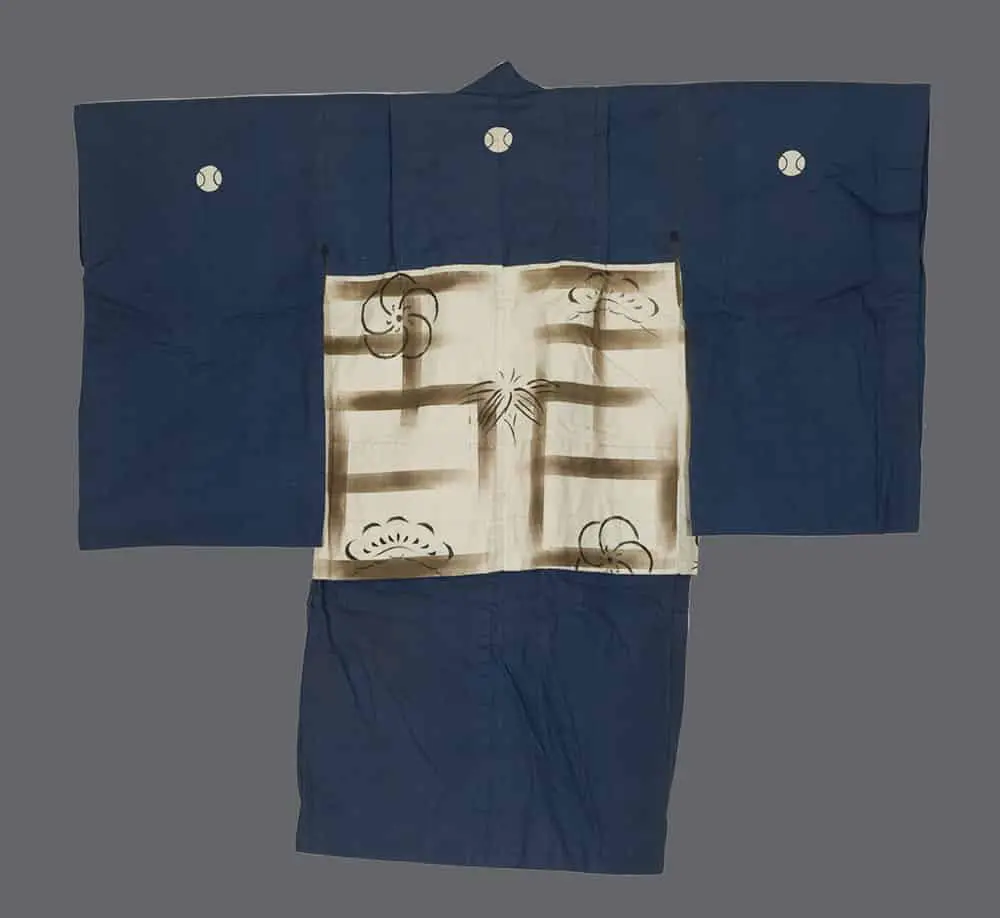
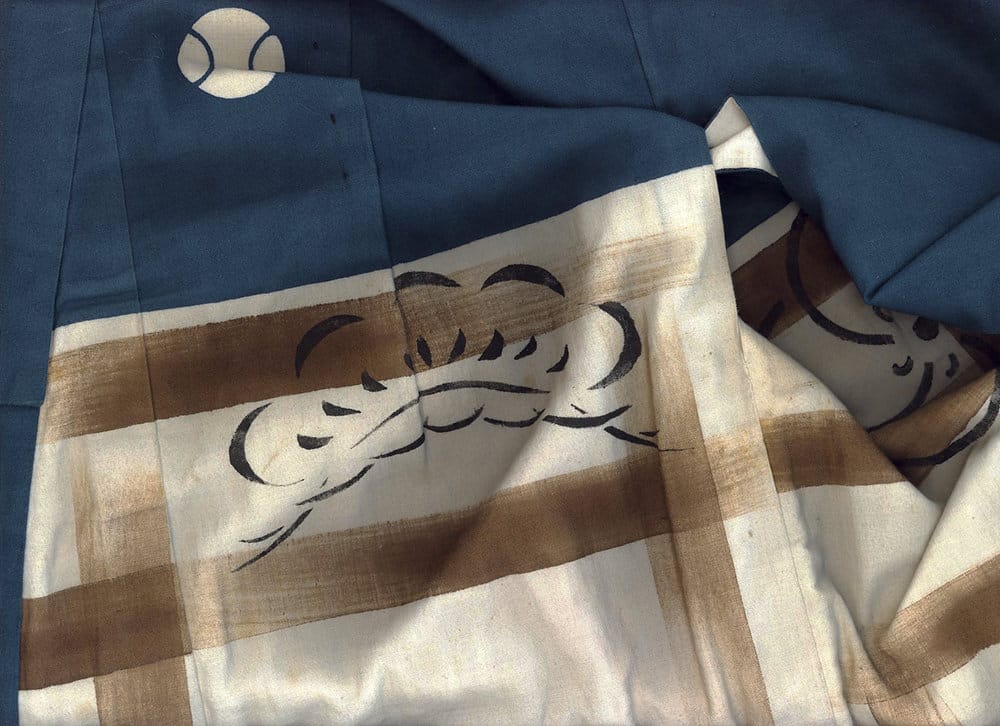
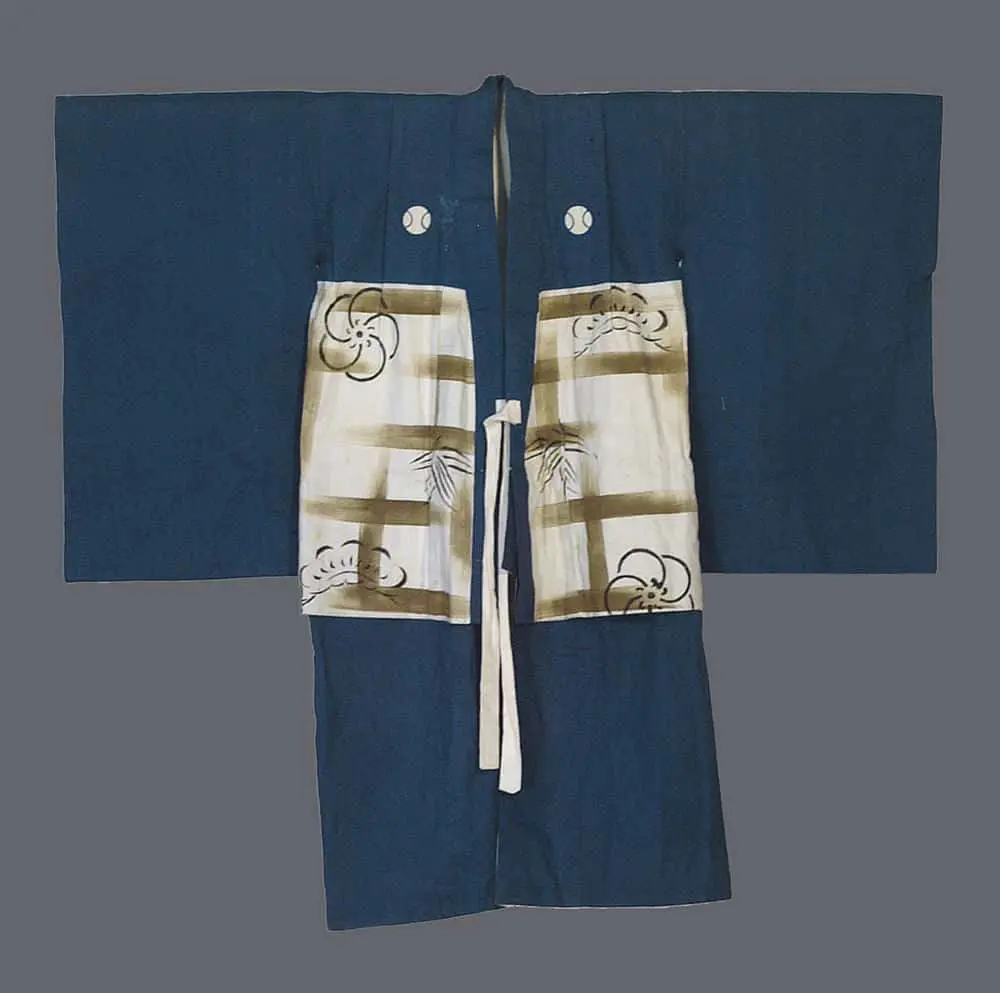
This boy's cotton kimono is a rare and poignant example of rural celebratory attire, likely intended for a formal ceremony or festival. The garment is crafted from a durable indigo-blue cotton and is distinguished by five mon (family crests)—two on the front and three across the back—indicating its status as formal dress. A bold, horizontal band of white cotton is inset across the midsection, serving as a canvas for expressive sumi-e (ink wash) hand-painting.
The hand-painted imagery features a rhythmic arrangement of auspicious motifs, including stylized plum blossoms (ume), pine needles (matsu), and bamboo leaves (take), collectively known as the "Three Friends of Winter". These elements are rendered with fluid, gestural brushstrokes in shades of charcoal and olive-brown, reflecting a rustic yet sophisticated folk-art aesthetic. Symbolically, these motifs represent resilience and longevity, serving as a wearable wish for the child's strength and prosperity. The juxtaposition of the utilitarian indigo cotton with the refined hand-painted narrative captures a unique intersection of rural tradition and formal Japanese iconography.
It's in very good condition, barring several small stains on the front. The measurements are 40 inches (102 cm) from sleeve-end to sleeve-end and 37 inches (94 cm) in height.
Display & Installation Notes


Payment Options: We primarily accept PayPal for all transactions. Credit and debit cards are not accepted. If you prefer to pay by personal check instead of PayPal, please note this preference in the "Additional comments" field when placing your order.Ordering Process
To receive your PayPal invoice, simply fill out the form.
Shipping Details: We ship all orders to the address associated with your PayPal payment. Please ensure your PayPal shipping address is current and accurate.A phone number is required during checkout, as our shipping carrier may need to contact you regarding delivery questions.Shipping RatesUnited States and Canada: $20International destinations (air mail): $40