.avif)

Sayagata Kimono: Lemon & Magenta Pop Art Peony
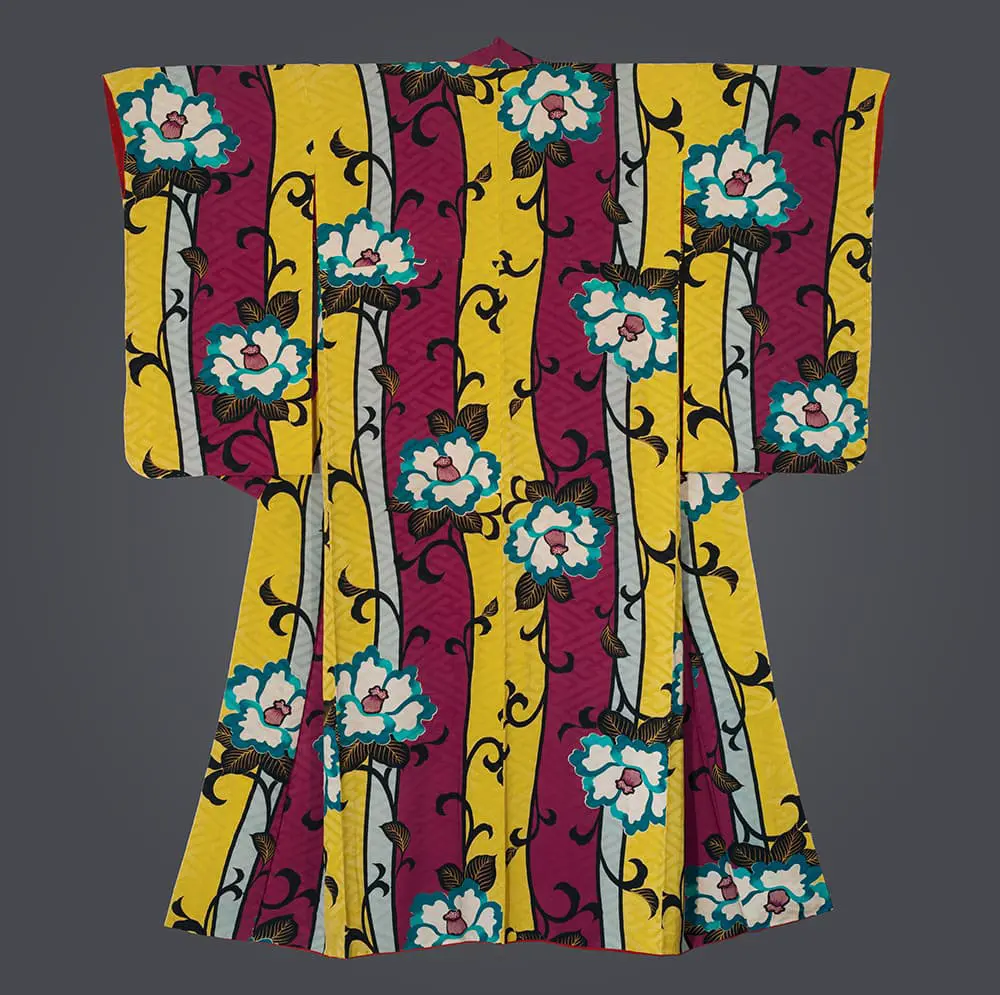
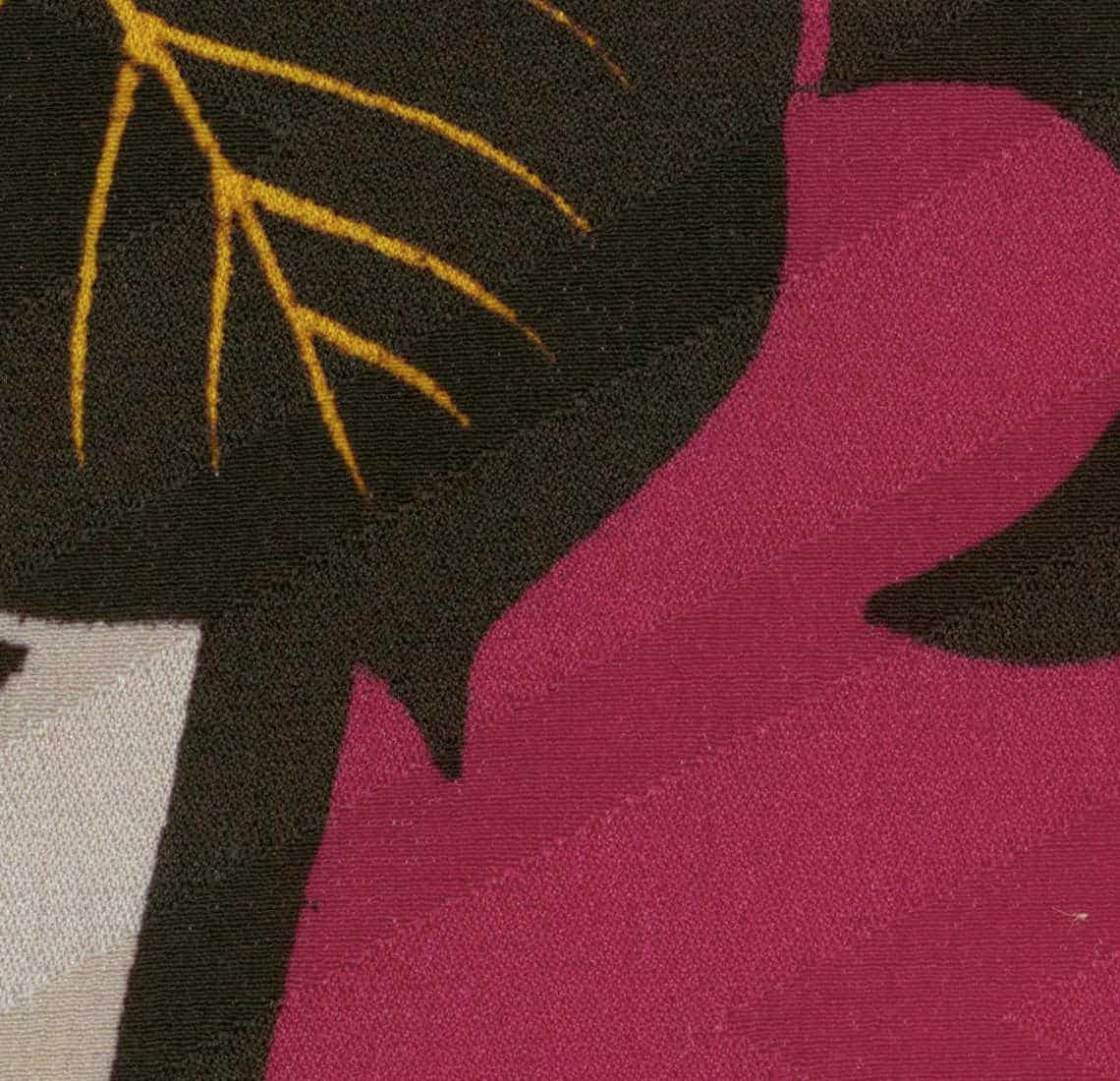
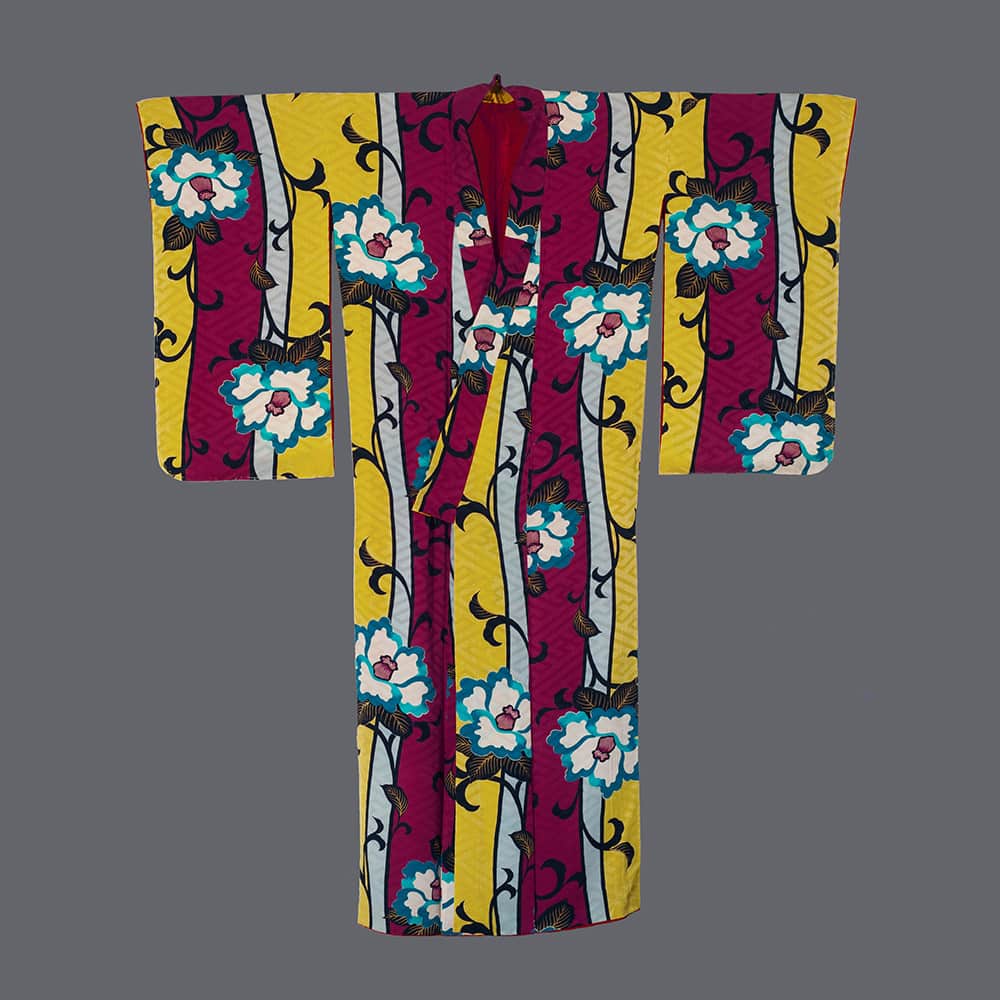
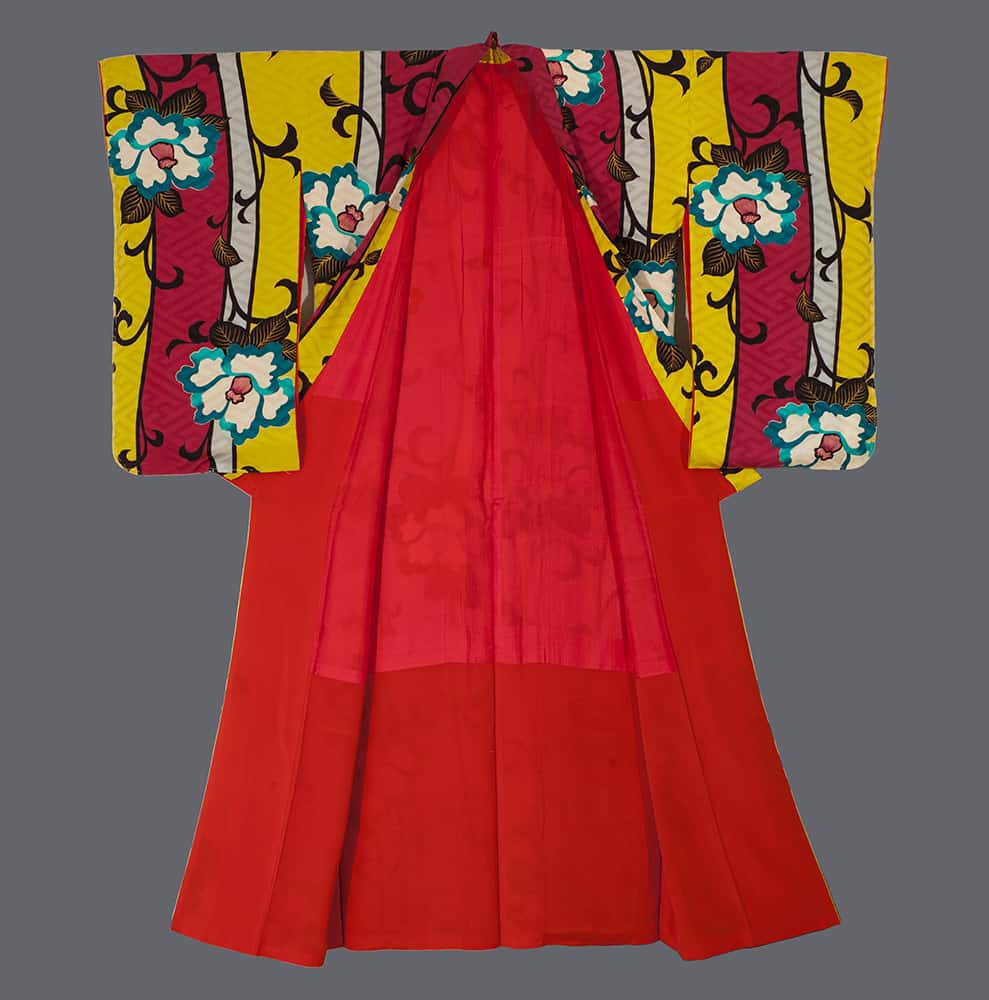
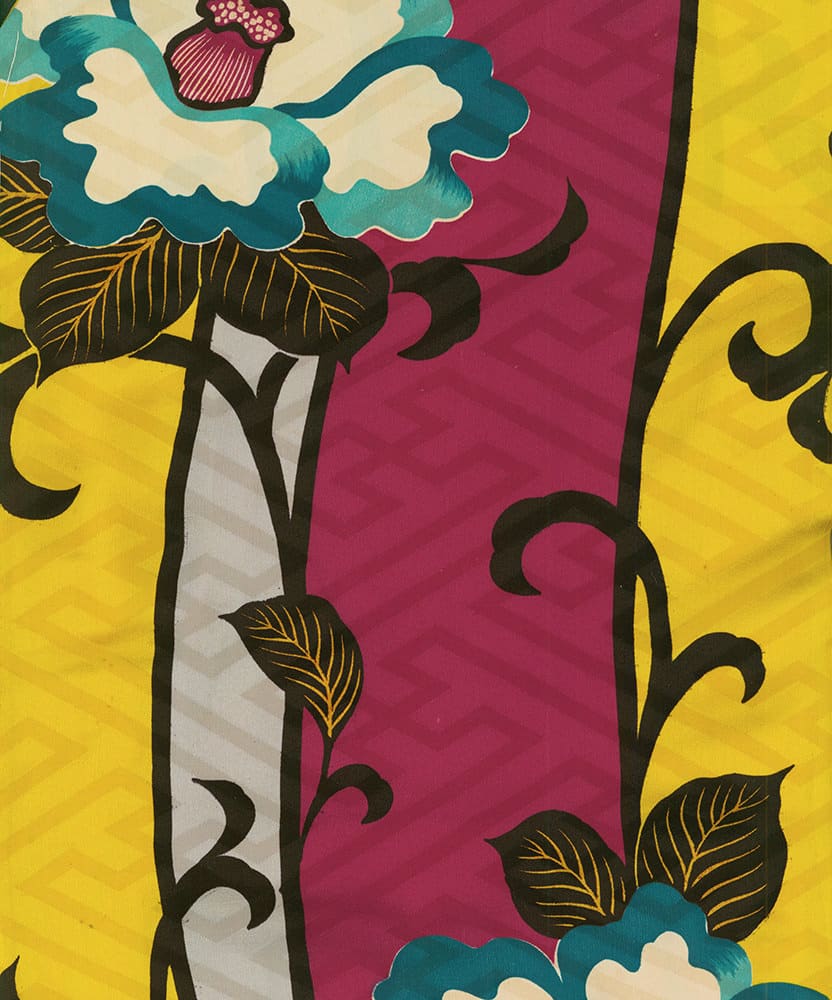

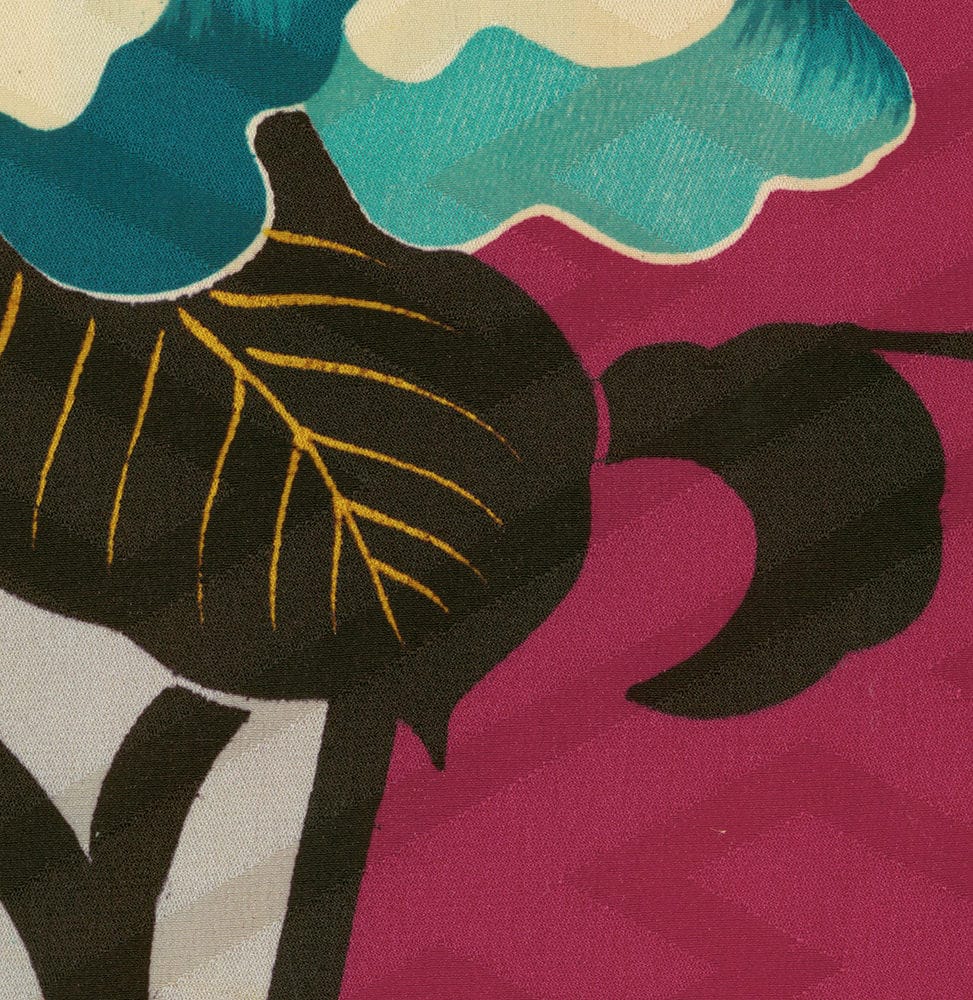
This kimono is an electrifying example of the "Taisho Roman" aesthetic, effectively utilizing a mixed-media approach to textile design. The garment is constructed from rinzu (silk damask), a glossy fabric that provides a luxurious, light-reflecting foundation. Embedded within this weave is the sayagata (interlocking key-fret) pattern, a continuous geometric motif of Buddhist origin derived from the manji (swastika), representing the eternal continuity of life. This subtle, monochrome woven texture serves as a sophisticated counterpoint to the aggressive, flat application of the surface design, creating a tactile interplay between the ancient woven background and the modern printed foreground.
The surface design, executed via silkscreen printing, showcases the era's fascination with chemical dyes and mass-production technologies that allowed for bolder, more saturated hues. The color palette is unabashedly loud, featuring alternating vertical bands of acidic lemon yellow and deep magenta. Overlaid on these stripes are scrolling black vines and large, stylized peonies (botan) rendered in white and teal. The choice of silkscreening creates sharp, poster-like edges and opaque blocks of color, giving the textile a graphic quality akin to a woodblock print or a stained-glass window.
Artistically, this textile perfectly synthesizes the organic curves of Art Nouveau with the structural geometry of Art Deco. The sinuous, darker vines that crawl up the garment mimic the "whiplash" curves characteristic of Art Nouveau, while the rigid vertical stripes and the pixel-like geometry of the underlying sayagata lean toward the Constructivist and Deco sensibilities of the interwar period. Symbolically, while the peony traditionally represents wealth and nobility, and the sayagata represents longevity, their usage here is primarily decorative rather than talismanic. This kimono was designed for the high-fashion "Modern Girl" who prioritized visual impact, color theory, and cosmopolitan flair over the understated auspiciousness of the past.
It measures approximately 51 inches (130 cm) across the shoulders and stands at about 59 inches (150 cm) in height. The upper inner lining (doura) is hand-spun and woven silk, while the lower lining (hakkake) is crafted from kinsha (fine crepe).
This artwork is featured on page 219 of Art Kimono: Aesthetic Revelations of Japan, 1905-1960. This book, published by Yorke Antique Textiles, can be previewed or purchased on our website here.
Display & Installation Notes


Payment Options: We primarily accept PayPal for all transactions. Credit and debit cards are not accepted. If you prefer to pay by personal check instead of PayPal, please note this preference in the "Additional comments" field when placing your order.Ordering Process
To receive your PayPal invoice, simply fill out the form.
Shipping Details: We ship all orders to the address associated with your PayPal payment. Please ensure your PayPal shipping address is current and accurate.A phone number is required during checkout, as our shipping carrier may need to contact you regarding delivery questions.Shipping RatesUnited States and Canada: $20International destinations (air mail): $40