.avif)

Indigo & Cream Banded Rayon Kimono with Orange Flowers
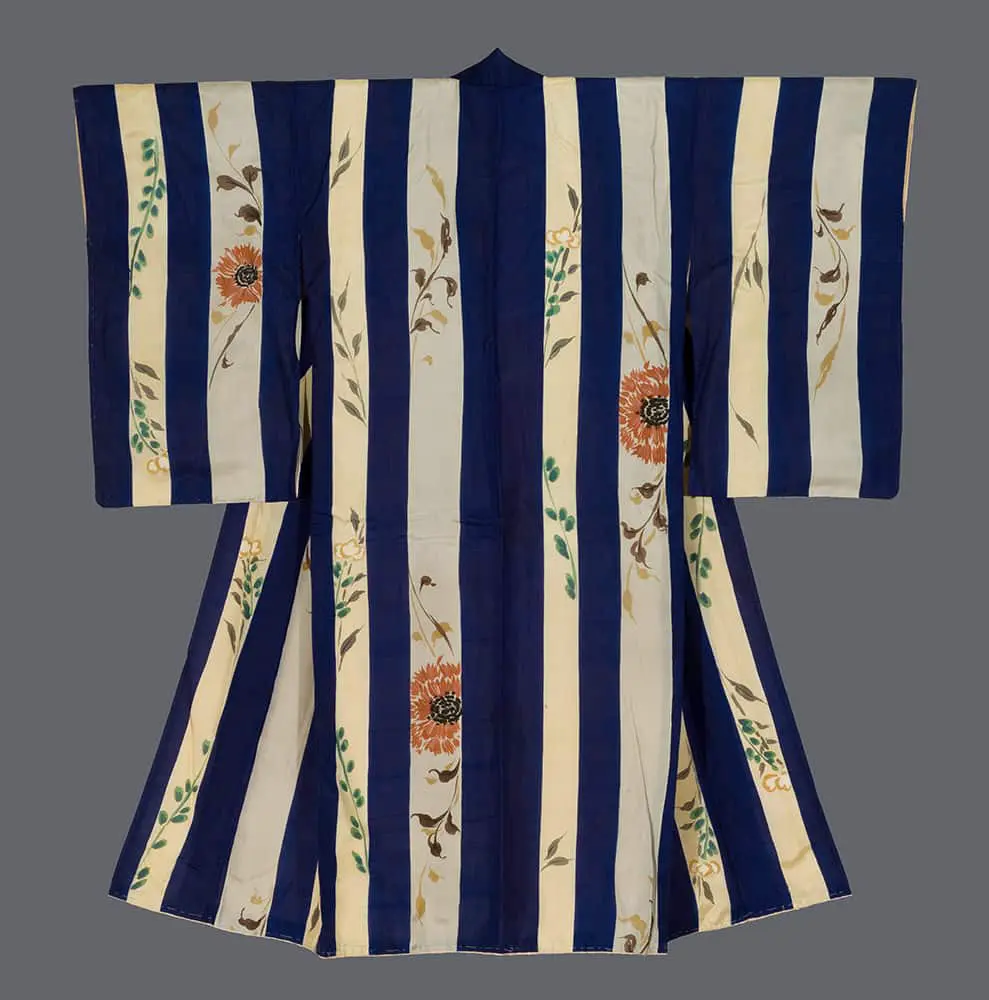
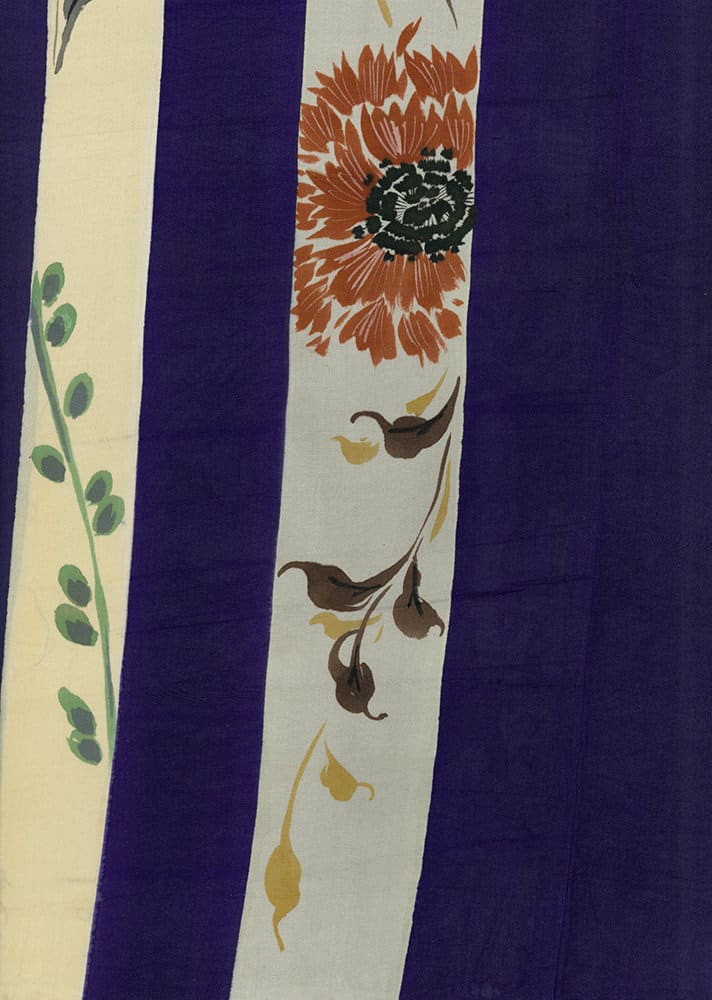
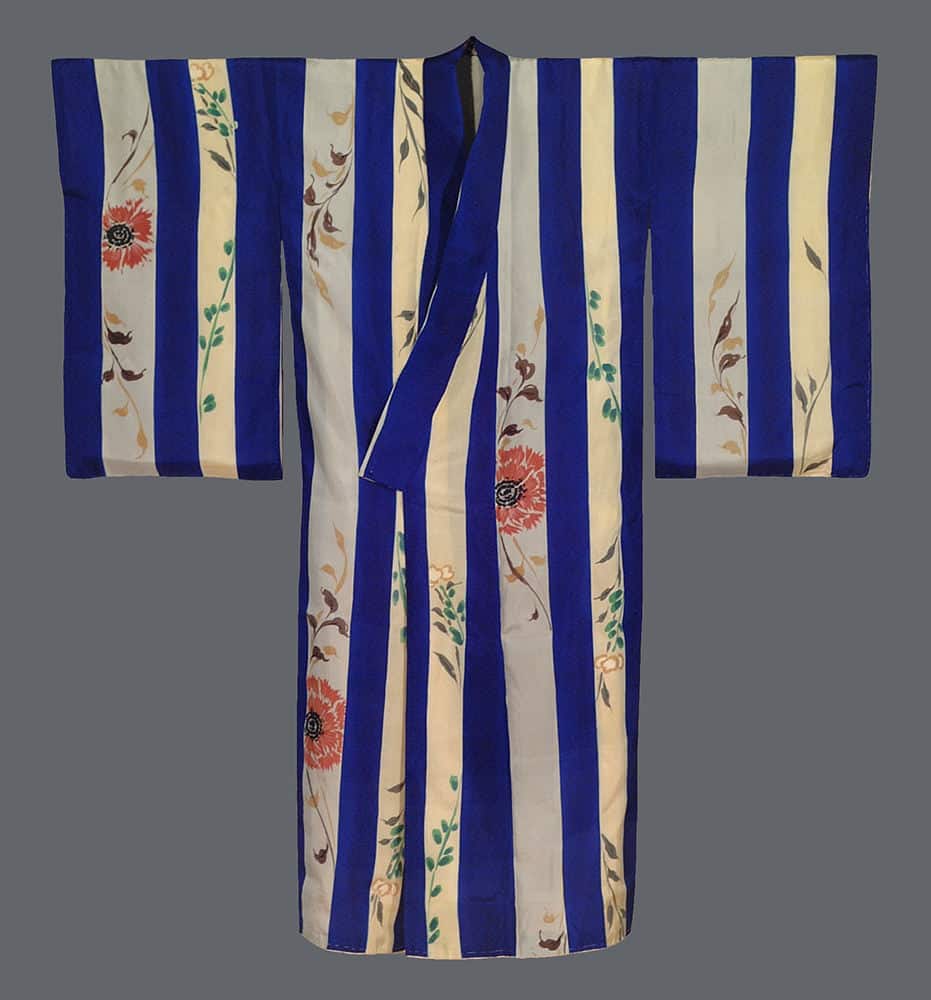
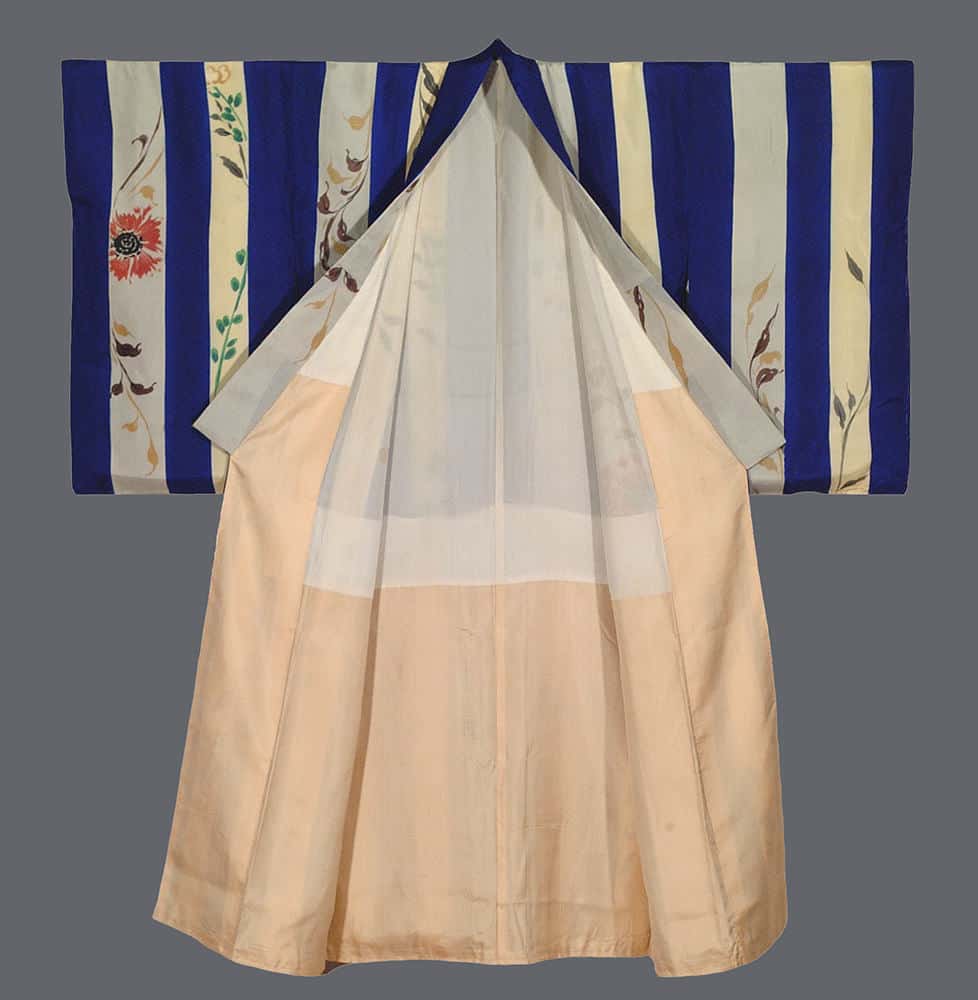
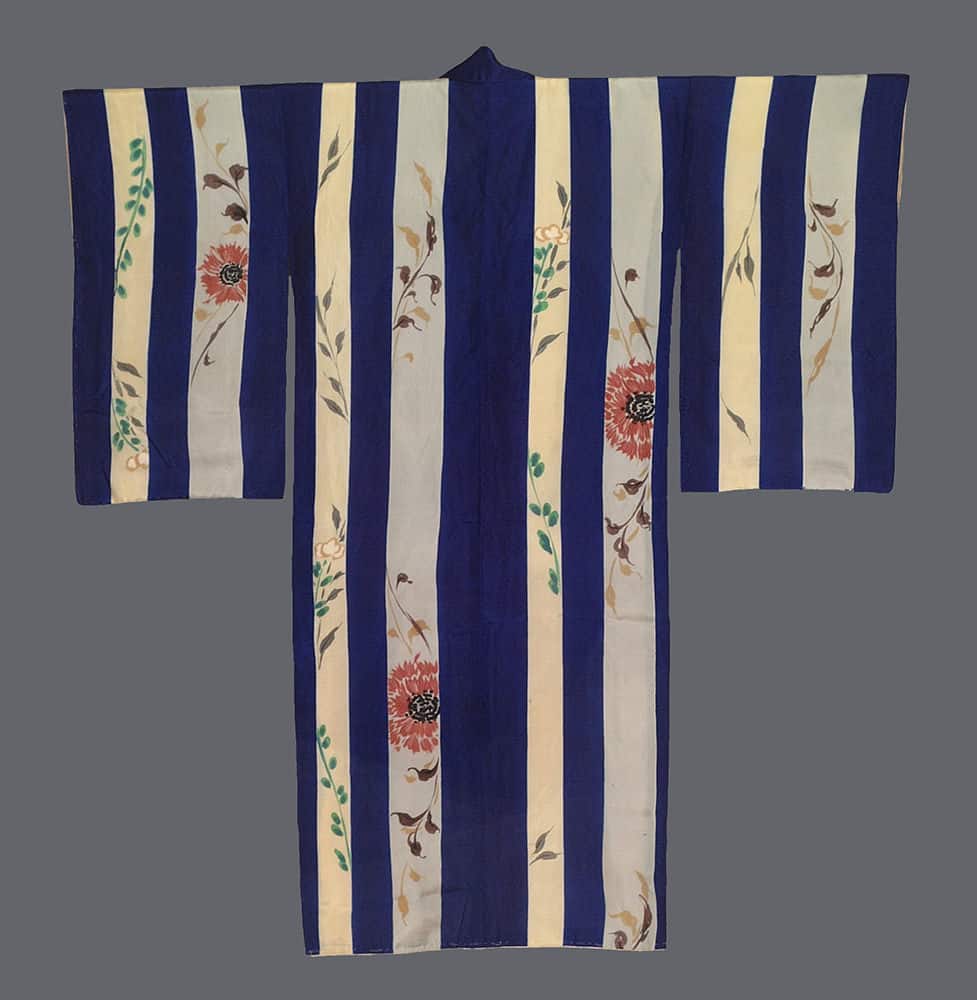
This small rayon kimono is a vibrant example of mid-20th-century Japanese design, utilizing modern materials and silkscreening techniques to achieve a bold, graphic aesthetic. The garment is defined by broad, alternating vertical bands of deep indigo and cream—a motif known as tatejima that suggests strength and structured elegance. Overlaid on these stripes are spirited, painterly floral vines featuring bright orange blossoms, likely stylized chrysanthemums, and delicate green leaves. The use of rayon, a popular artificial silk of the era, combined with the precision of silkscreening, reflects the mid-century movement toward democratizing luxury aesthetics through industrial innovation.
Symbolically, the chrysanthemum (kiku) remains a powerful icon of longevity and nobility, while the climbing vines represent growth and resilience, themes particularly fitting for a child's garment. The high-contrast color palette of indigo and orange creates a dynamic energy that bridges traditional Japanese color sensibilities with modern graphic trends. This piece stands as a testament to the innovative spirit of Japanese textile production, where traditional motifs were reimagined through the lens of industrial progress and playful, contemporary design.
It measures 49 inches (124 cm) from sleeve-end to sleeve-end and stands 51 inches (130 cm) tall.
Display & Installation Notes


Payment Options: We primarily accept PayPal for all transactions. Credit and debit cards are not accepted. If you prefer to pay by personal check instead of PayPal, please note this preference in the "Additional comments" field when placing your order.Ordering Process
To receive your PayPal invoice, simply fill out the form.
Shipping Details: We ship all orders to the address associated with your PayPal payment. Please ensure your PayPal shipping address is current and accurate.A phone number is required during checkout, as our shipping carrier may need to contact you regarding delivery questions.Shipping RatesUnited States and Canada: $20International destinations (air mail): $40