.avif)

Art Deco Kimono: Persimmon & Lemon Yabane Art
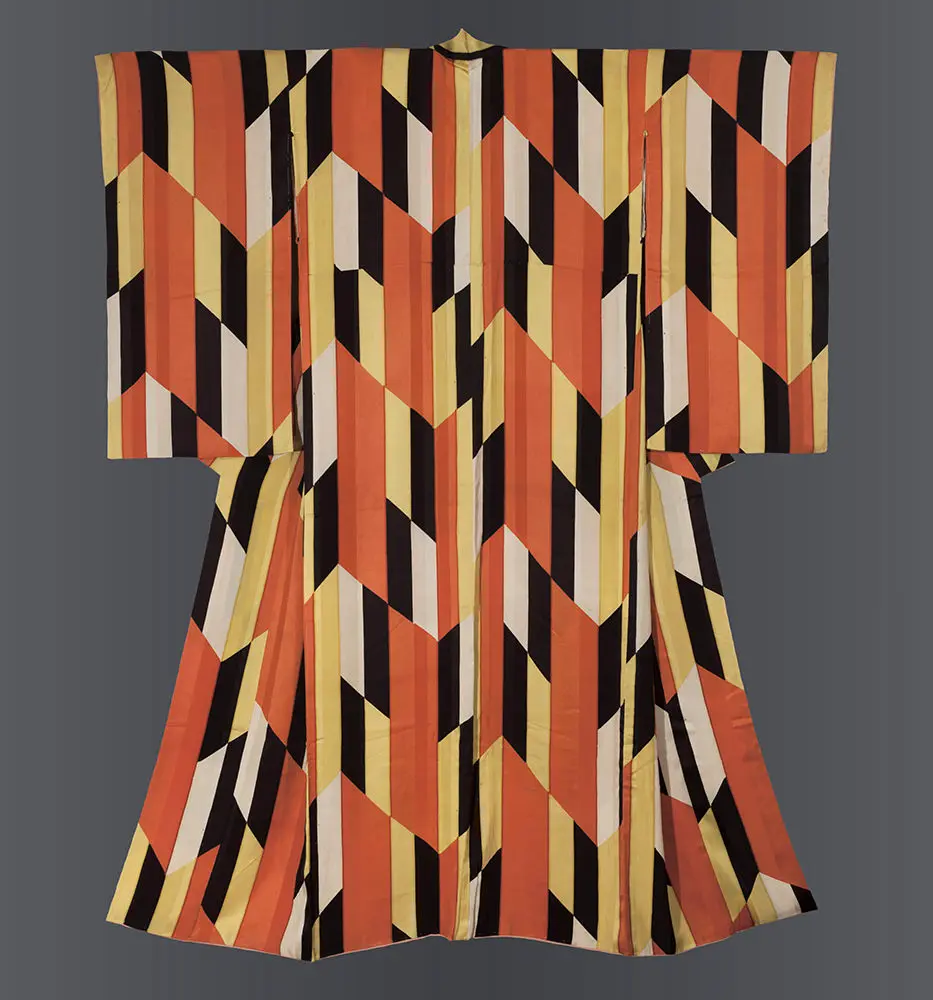
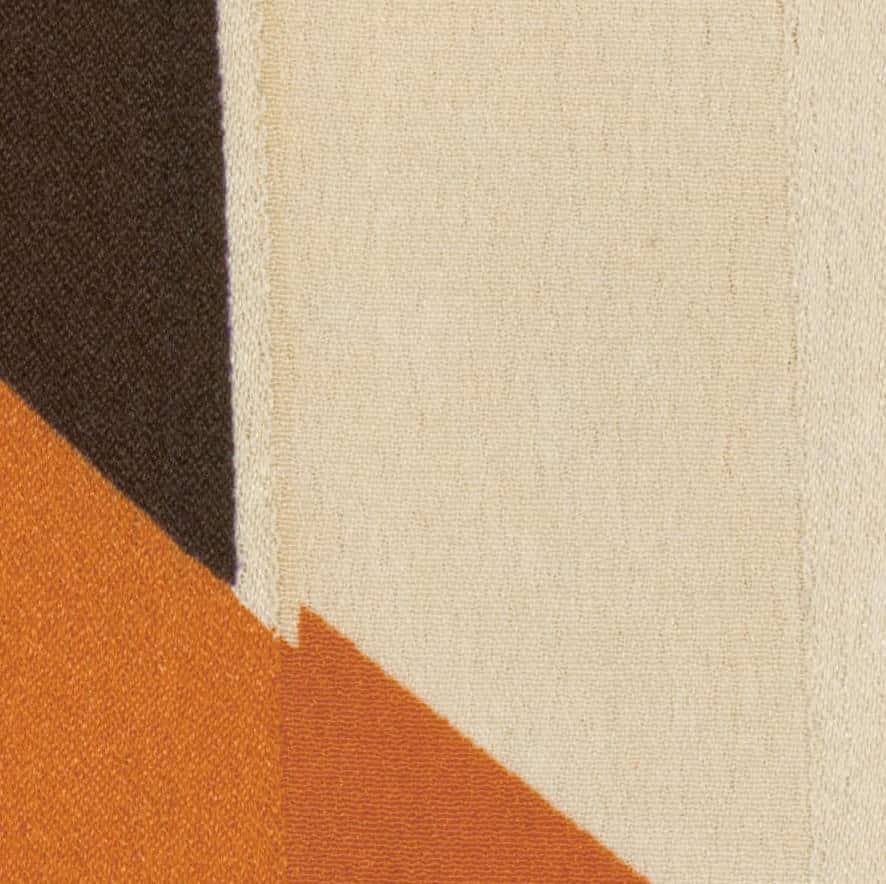

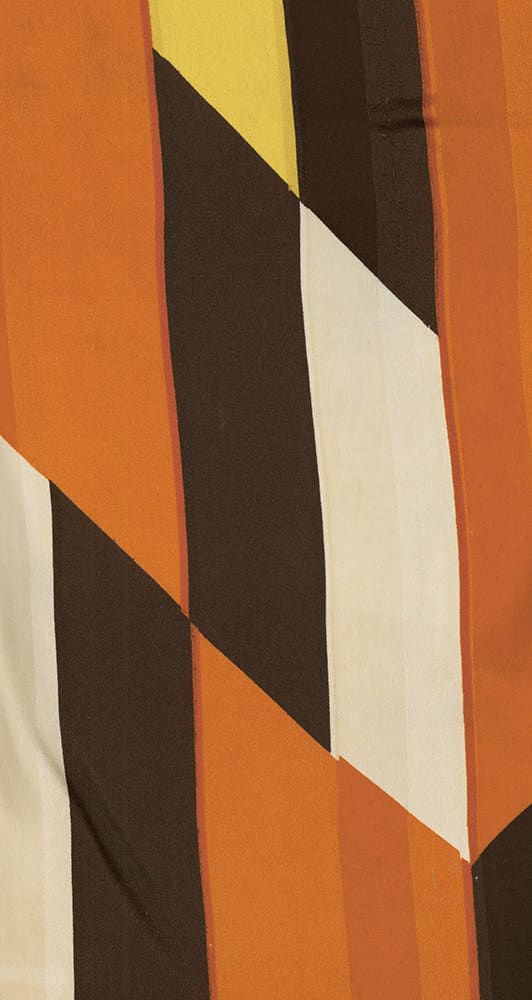
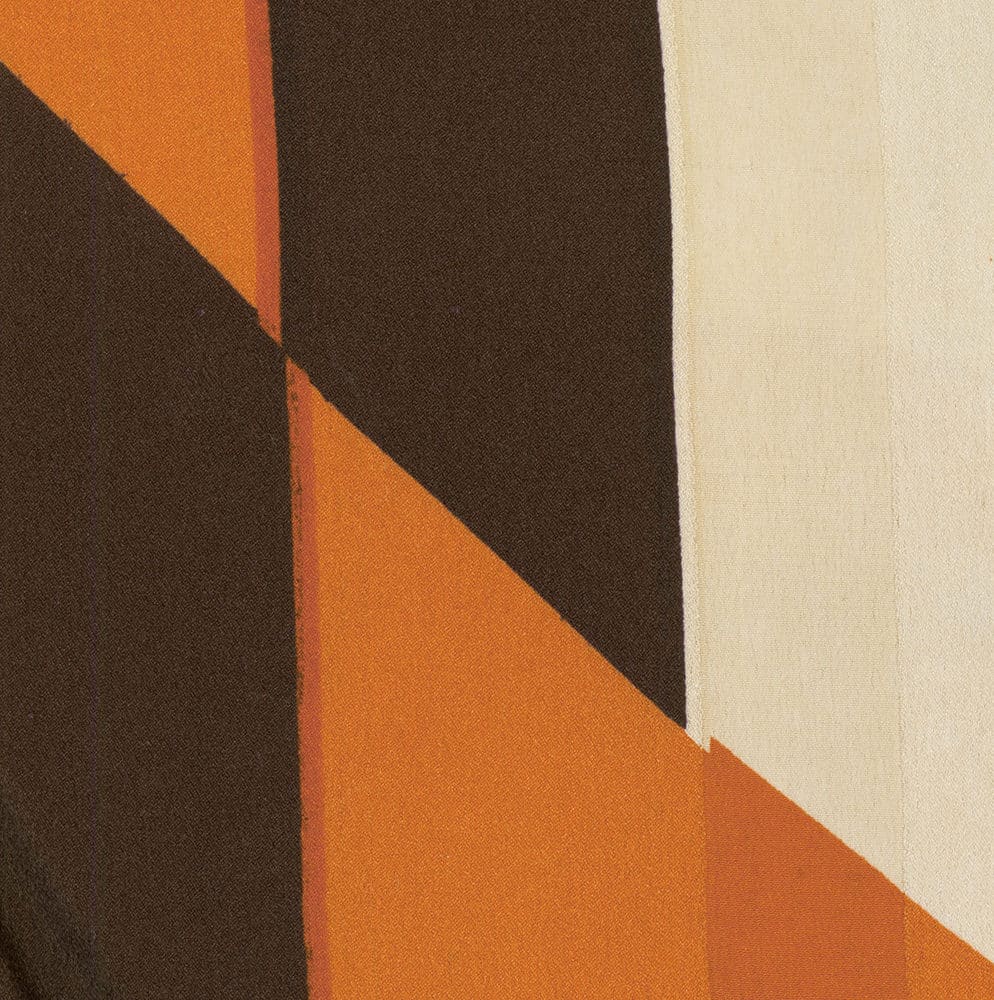

This rinzu silk kimono acts as a visual manifesto for the bold, graphic sensibilities of the high Taisho Roman and early Showa Modern eras. The garment is crafted from rinzu (silk damask), a fabric prized for its lustrous, satin-like surface. This glossy texture is crucial to the design's success; the underlying weave catches the light, adding a shimmering dimensionality that softens the severity of the hard-edged, geometric print, preventing it from looking too flat or rigid.
The design features a monumental deconstruction of the traditional yabane (arrow-feather) motif, magnified to such an extreme scale that it borders on total abstraction. The pattern consists of staggering, interlocking columns of chevrons in a high-voltage palette of persimmon orange, graphic black, and pale lemon yellow. This tri-color combination is stark and aggressive, utilizing high contrast to create a vibrating optical rhythm that mimics the syncopated beats of the jazz music popular during this period. The "feathers" are stripped of their fletching details, reduced to pure angular vectors that zigzag continuously across the body.
Artistically, the garment is a pure expression of Art Deco geometry. It rejects the curvilinear, organic forms of the previous Art Nouveau era in favor of sharp angles, stepped forms, and machine-like precision. The design also hints at the influence of Constructivism in its reliance on structural diagonals and unadorned blocks of color. Symbolically, while the yabane motif traditionally represents steadfastness and focus (as an arrow flies straight), this interpretation transforms that meaning into a symbol of modern speed and electric energy. It suggests a wearer who is dynamic, forward-moving, and fully embraced the cosmopolitan, industrial aesthetic of the 20th century.
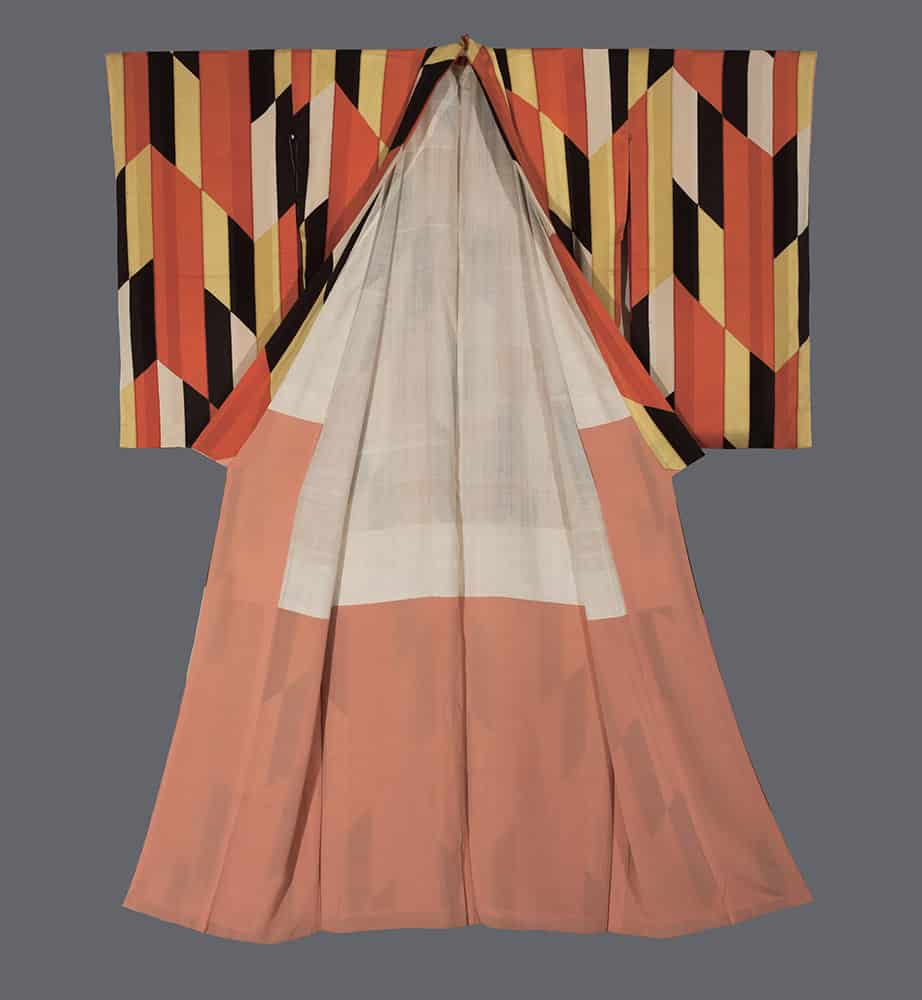
The silk is exceptionally soft and of top quality. Its upper inner lining (doura) is crafted from undyed hand-spun and handwoven silk, while the pink inner lower lining (hakkake) is made of kinsha (fine crepe) silk. It measures approximately 51 inches (130 cm) across the shoulders and stands at about 61 inches (155 cm) in height
This artwork is featured on page 346 of Art Kimono: Aesthetic Revelations of Japan, 1905-1960. This book, published by Yorke Antique Textiles, can be previewed or purchased on our website here.
Display & Installation Notes
Historical Context


Payment Options: We primarily accept PayPal for all transactions. Credit and debit cards are not accepted. If you prefer to pay by personal check instead of PayPal, please note this preference in the "Additional comments" field when placing your order.Ordering Process
To receive your PayPal invoice, simply fill out the form.
Shipping Details: We ship all orders to the address associated with your PayPal payment. Please ensure your PayPal shipping address is current and accurate.A phone number is required during checkout, as our shipping carrier may need to contact you regarding delivery questions.Shipping RatesUnited States and Canada: $20International destinations (air mail): $40